Category: Archive

Archived posts were published before July 1, 2024. They are maintained for historical reference and may not meet current accessibility standards.

  • Addition by Division or How to Create a Judicial District in Colorado

    by Conrad Imel

    Recently, the General Assembly created a twenty-third judicial district in Colorado. But can the General Assembly just make a new judicial district? Even though the judicial department is a separate branch of the government, the state constitution says it can. In this article we’ll look at the General Assembly’s role in creating and changing judicial districts and the recent change that it made.

    Judicial districts are responsible for operating district courts within the district.1 District courts are the courts of general jurisdiction in Colorado. They hear civil cases involving any dollar amount, criminal matters, and domestic relations cases. District courts also hear cases involving probate and minors, such as adoption, dependency and neglect, and juvenile delinquency; except in Denver, which has a separate probate court and juvenile court to handle these cases.

    Judicial districts weren’t created by the legislature to administer courts; they are required by the state constitution. Article VI, section 10 of the Colorado Constitution2 declares that “[t]he state shall be divided into judicial districts” and authorizes the General Assembly to change the number and boundaries of judicial districts with a two-thirds vote of the members of each chamber. Presently, state courts are divided into 22 judicial districts. Some districts contain multiple counties while others consist of a single county.

    Colorado’s constitution initially provided for four judicial districts with one judge each. Five years later, in 1881, the General Assembly added three new judicial districts, bringing the total number of districts to seven. The General Assembly regularly increased the number of judicial districts over the next 82 years, culminating with the creation of the 22nd Judicial District in 1963. It wouldn’t add another district for nearly 60 years.

    In 2020, the General Assembly passed House Bill 20-1026,3 creating a twenty-third judicial district that will begin operations on January 7, 2025. Currently, the 18th Judicial District consists of Arapahoe, Douglas, Elbert, and Lincoln counties. Beginning in 2025, three of the four counties, Douglas, Elbert, and Lincoln, will leave the 18th Judicial District and become the new 23rd Judicial District, served by eight judges. House Bill 20-1026 decreases the number of judges in the 18th Judicial District by seven, from 24 to 17. The bill easily satisfied the constitution’s two-thirds vote requirement, receiving just two “no” votes in the House and one in the Senate.

    For a legislator, creating a new judicial district isn’t as simple as sponsoring a bill and getting two-thirds of your colleagues to agree to it. The state constitution includes a few requirements for judicial districts and judges that the bill sponsor (and bill drafter!) need to keep in mind. First, article VI, section 13 of the Colorado Constitution requires that each judicial district have an elected district attorney, and section 1-4-204, Colorado Revised Statutes, provides that district attorneys are elected at a general election (held in even-numbered years). Any bill establishing a new judicial district will need to account for a district attorney election and the time it takes the newly elected district attorney to assume the office.

    Additionally, the Colorado Constitution requires a district judge to reside in the judicial district in which the judge serves and prohibits abolishing a judge’s office until the end of the judge’s term. A judge may be required to change districts, though, so long as the judge resides in the new district. To comply with these constitutional provisions and ensure that both the new and continuing judicial districts have the proper number of judges who reside in their respective districts, the bill sponsor needs to carefully consider the date the new district will begin operations and account for where the judges of the existing district reside.

    It may not happen as often as it used to, but as long as two-thirds of the members agree, the General Assembly can change the state’s judicial districts. Even if the legislature waits another 50 years to do it again, it will need to be mindful of when the new district begins operations to avoid any constitutional issues.


    1. Judicial districts also operate county courts, except for Denver County Court, which is operated by the City and County of Denver and is, in effect, a combined municipal and county court. ↩︎
    2. Link to Article VI, section 10 of the Colorado Constitution. ↩︎
    3. https://leg.colorado.gov/bills/HB20-1026 ↩︎
  • The Four Ws and One H of Reconsideration of a Previous Vote

    by Sharon Eubanks

    Editor’s note: This article was originally posted April 11, 2016, and has been edited as appropriate.

    The definition of “reconsider” pretty much sums up what reconsideration is all about – “to consider again, especially with a view to change a decision or action.” In the legislative arena, “reconsideration” is the mechanism in the rules that enables a committee of reference or the House or the Senate to consider changing an action it has already taken.

    A legislative body has a right to reconsider a vote on an action previously taken by the body, subject to certain limits. When a body reconsiders its vote, that original vote is canceled completely, as though it had never been taken, and the body immediately votes again upon the question reconsidered.

    Closely related to reconsideration is giving notice of intent to reconsider, which provides notice of a member’s intent to reconsider, at some point in the future, a prior vote on an action. The effect of giving notice of intent to reconsider is to suspend all action on the subject of the motion until either the reconsideration is acted on or the time to act on the reconsideration has expired. However, giving notice of intent to reconsider does not necessarily mean that reconsideration will actually occur.

    Senate Rule 181 and House Rule 352 govern reconsideration and notice of intent to reconsider in Colorado legislative proceedings on the floor and in committees of reference.

    What can be reconsidered? Any action that the House or Senate takes when conducting business as a body and any action that a House or Senate committee of reference takes may be reconsidered by the acting body. But reconsideration is not allowed for an action that the House takes while sitting as the Committee of the Whole (COW).

    The Senate does not have a similar rule expressly prohibiting reconsideration of an action of the COW, but there are some practical problems in applying the reconsideration rules when the Senate is sitting as the COW. For example, how would the chair determine if the person moving for reconsideration voted on the “prevailing side” (see explanation of who can request reconsideration, below) when votes in the COW are taken viva voce? However, at least once recently, a Senator made a motion to reconsider an action of the COW and the motion was considered without objection. Nonetheless, generally it has been the Senate’s practice to not permit reconsideration during the COW.

    Who can request reconsideration?  In both the House and the Senate, only a member who voted on the prevailing side of an action, whether taken on the floor or in committee, may make a motion to reconsider that action. Sometimes a member will switch his or her vote at the last moment to the prevailing side to preserve the option of subsequently moving to reconsider the action.

    Only a House member who has voted on the prevailing side of an action of the House may give notice of intent to reconsider that action. And, while only a Senator who voted on the prevailing side may give notice of intent to reconsider a committee action, any Senator, regardless of how he or she voted, may give notice of intent to reconsider an action of the Senate.

    How does reconsideration occur? Reconsideration occurs after a member makes a motion to reconsider a House or Senate floor or committee action and the motion is approved. In the Senate, a majority of the members elected to the Senate or a majority of the members of a committee of reference, whichever body took the action at issue, must approve the motion to reconsider. In the House, two-thirds of the members elected to the House or two-thirds of the members of a House committee, as applicable, must approve a motion to reconsider unless a member makes the motion during the last two days of session. In that situation, only a majority of members must approve a motion to reconsider.

    To prevent the abuse of motions to reconsider, if a motion to reconsider is lost or, upon reconsideration, the original action is affirmed, the same Senate action cannot be reconsidered a second time unless the motion is approved by unanimous consent of the Senate or a Senate committee, as appropriate. If a motion to reconsider is defeated or the original action is affirmed by the House or a House committee, no further motion to reconsider the same action is allowed.

    Senate members of committees of reference may give notice of intent to reconsider. In this case, the measure affected by the notice must be held until the next regularly scheduled committee meeting. But giving notice to reconsider is out of order if holding the measure will cause it to miss a deadline for passage out of committee and the deadline isn’t extended. In contrast, members of House committees of reference cannot give notice of intent to reconsider a committee action.

    When can reconsideration occur? A member must make a motion to reconsider an action of a House or Senate committee either at the meeting at which the action is taken or at the next meeting of the committee.

    A Senator must make a motion to reconsider, or give notice of intent to reconsider, an action of the Senate on the same day that the action is taken or on either of the next two days of actual session. A Representative must make a motion to reconsider, or give notice of intent to reconsider, an action of the House before adjournment of the legislative day on which the action is taken.  If notice is timely given, the House member then has until noon on the next day of actual session to make a motion to reconsider the action.

    But, it’s important to remember that a body can reconsider an action only if the measure on which the action was taken is still before the body and the action is still capable of being changed. So, a committee member can’t make a motion to reconsider a committee action on a measure if the committee report has already been signed by the chair and delivered to the House or Senate front desk. And a member can’t move to reconsider a third reading vote if the measure has already been introduced in the second house or delivered to and acted upon by the Governor.

    A Senator’s motion to reconsider the action taken on a measure already transmitted to the House, but not yet introduced, must be accompanied by a motion asking the House to return the measure to the Senate. If a House member makes a motion to reconsider, the chief clerk of the House is directed to request the return of the relevant measure if it has already been transmitted to the Senate or the Governor. But if the measure’s been introduced in the Senate or acted upon by the Governor, the measure can’t be returned to the House.

    Why would someone request reconsideration? In many situations, a motion to reconsider is used when a member, for whatever reason, doesn’t vote the way he or she intended to vote or a member is absent during the recorded vote on a measure. With reconsideration, the original vote is wiped away and replaced with the second vote. When controversial issues and close votes are involved, a motion to immediately reconsider a vote can be used to lock in that vote since unanimous consent is required for a subsequent motion to reconsider after the first motion to reconsider is lost or, upon reconsideration, the original action is affirmed. On the flip side, giving notice of intent to reconsider a vote can be used as a delay tactic to slow a measure’s progress through the legislative process or to allow time to try to convince enough members to change their votes and thereby change the action taken. Once notice is given, all action on a measure is suspended and the Secretary of the Senate or the Chief Clerk of the House, as applicable, holds the measure until the time for reconsideration has expired. In the Senate, giving notice of intent to reconsider can be used to delay a floor action up to three days and a committee action until the conclusion of the next regularly scheduled committee meeting. Giving notice of intent to reconsider can delay an action taken by the House until noon on the next day of actual session after the action is taken.

    1. https://www.leg.state.co.us/inethsr.nsf/Rule.xsp?id=SENRULES.18&catg=Senate&pg=2.0 ↩︎
    2. https://www.leg.state.co.us/inethsr.nsf/Rule.xsp?id=HSERULES.35&catg=House&pg=4.0 ↩︎
  • Legislative Ethics – Conflict of Interest

    “A member who has a personal or private interest in any measure or bill proposed or pending before the general assembly, shall disclose the fact to the house of which he is a member, and shall not vote thereon.” Article V, section 43 of the Colorado Constitution, effective August 1, 1876.

    Legislative ethics principles have been included in the state’s constitution and been an integral part of legislative proceedings from the earliest days of statehood. The legislature expanded on these ethical principles and codified the standard of conduct expected for all persons involved with government in House Bill 88-1209. The ethical principles specific to the General Assembly listed in the bill and now codified as section 24-18-107, Colorado Revised Statutes, provide guidance to legislators when determining whether a conflict of interest exists and instructions on disclosing such an interest according to the applicable chamber’s rules.  It also states that a failure to disclose does not constitute a breach of the public trust of legislative office.

    According to Joint Rule 42,1 a legislator is considered to have a personal, private, or financial interest in a pending bill, measure, or question if the passage or failure of the legislation will result in the legislator deriving a direct financial or pecuniary benefit that is greater than any benefit derived by or shared by other persons in the legislator’s profession, occupation, industry, or region. Joint Rule 42, like section 24-18-107, Colorado Revised Statues, provides that a legislator is not considered to have such an interest in legislation if the interest arises from legislation affecting the entire membership of a class to which the legislator belongs. House Rule 21(c)2, and Senate Rules 17(c)3 and 414 discuss voting, disclosing, and excusing oneself from a vote.

    Seems easy enough. Here are some hypothetical situations for your consideration:

    Situation #1. The General Assembly is considering a bill that would provide comprehensive state assistance to promote biotechnological research within the state as well as related commercial applications. The assistance includes tax benefits, the establishment of a special state fund, and a new grant program. You are a member of the General Assembly and your spouse is a well-known and well-recognized research scientist who heads a special institute for biotechnological research at one of our state’s leading research universities. The bill would direct state financial assistance to a variety of public and private entities, but significant resources would be particularly directed to the institute headed by your spouse. It is likely the benefits from the bill would increase the institute’s budget and your spouse’s national profile and income.

    May you vote on the legislation?  

    1. Since the legislation only benefits your spouse, there is no problem voting on the legislation.
    2. With sluggish economic growth, the legislation is vital for creating jobs and members need to put aside their private qualms about ethics and enact good programs.
    3. The legislation would appear to distribute benefits to many private and public entities across the state. You can vote on the legislation because all persons with an interest in the legislation amount to one big class of persons.
    4. By virtue of your spouse’s position, you have a personal, private, or financial interest in the legislation necessitating your abstention from voting on the bill.

    The correct answer is 4. Under Joint Rule 42, the relevant inquiry is whether you, as a member, will benefit from or be disadvantaged by the legislation more than any other member of your profession, occupation, industry, or region. Because of the special position your spouse holds and the extra benefits that the bill directs to the institute generally and to your spouse more specifically, there is a reasonable likelihood that your immediate household will benefit from the legislation more than others in your profession, occupation, industry, or region. This gives you a personal, private, or financial interest in the legislation necessitating your abstention from voting on the bill.

    Situation #2. You are the owner of several apartment buildings and other rental properties in your community. A bill has been introduced that would lengthen the period of time available to a tenant to pay past-due rent.

    May you vote on the legislation?

    1. YES. But only if you vote “for” the bill. Since the bill favors tenants and you are a property owner, no one would think it improper for you to support the bill.
    2. YES. Because the governing legal requirements specify that a conflict of interest situation does not arise from legislation affecting the entire membership of a class. Here, the relevant class is the entire group of rental property owners across the state. Because you are a member of this class, you do not have an improper conflict-of-interest situation and, accordingly, may vote on the legislation.
    3. NO. Because landlords are so distrusted in the community, it would be better to abstain than to call public attention to your outside real estate interests.
    4. NO. Existing law already affords tenants sufficient time within which to cure any default.

    The correct answer is 2. Section 24-18-107 (3), C.R.S., and Joint Rule 42 explicitly state that a conflict-of-interest situation does not arise from legislation that affects the entire membership of a class. Under this same principle, teachers who are members of the General Assembly may vote on education bills and attorneys who are members of the General Assembly may vote on bills affecting tort liability and evidentiary matters. Here, the relevant class is the entire group of rental property owners across the state. Assuming you will not benefit from, or be disadvantaged by, the legislation any more than any other owner of these properties statewide, an improper conflict-of-interest situation is not present. You would be permitted to vote on the legislation.

    1. https://www.leg.state.co.us/inethsr.nsf/Rule.xsp?id=JNTRULES.42&catg=Joint&pg=4.0 ↩︎
    2. https://www.leg.state.co.us/inethsr.nsf/Rule.xsp?id=HSERULES.21&catg=House&pg=2.0 ↩︎
    3. https://www.leg.state.co.us/inethsr.nsf/Rule.xsp?id=SENRULES.17&catg=Senate&pg=2.0 ↩︎
    4. https://www.leg.state.co.us/inethsr.nsf/Rule.xsp?id=SENRULES.41&catg=Senate&pg=4.0 ↩︎
  • Barney Ford: From Slavery to Successful Businessman

    by Ashley Athey

    If you take a drive up I-70 and visit Breckenridge, just off the main street you’ll see a little yellow Victorian house surrounded by modern restaurants and art museums. Step inside and you’ll be transported back in time to when Barney Ford was alive. But who was he? And why was he so important to our state’s history?

    Barney Ford was born into slavery in Virginia in 1822. His mother, Phoebe, prayed for her son to escape, and at the age of 17 Barney escaped his enslavement via the Underground Railroad and made it to Chicago.

    It was in Chicago that Barney met and married Julia Lyon (or Lyoni), who helped him pick out his middle and last names—as an enslaved person, he didn’t have them—and he chose Lancelot Ford. He worked as a barber and helped support the Underground Railroad and abolitionist efforts. But he dreamed of going west to California, and in 1851 the Fords set out together, traveling via ship from New York because traveling across the country as a former enslaved man was unsafe. When their ship stopped in Nicaragua, Barney and Julia went ashore and they fell in love with the area. Together they built a successful hotel and restaurant and stayed there for many years until a local civil war destroyed their businesses. The Fords left Nicaragua and, in 1860, moved to Colorado.

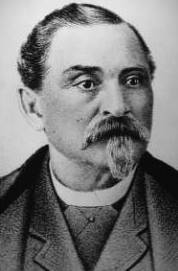
    Old photograph of Barney Ford.

    Barney Ford was one of the first people to find and put a claim on the gold deposits in the land above Breckenridge, but Colorado law forbade a Black man from owning mining claims or homesteads. After being chased away and threatened in the middle of the night, Ford opened up a barbershop on Blake Street in Denver. Barney Ford was a savvy and intelligent businessman, and he ran many other successful businesses in Denver, including the People’s Restaurant and the Inter-Ocean Hotel. He even opened a second Inter-Ocean Hotel in Wyoming.

    In 1880, Ford returned to Breckenridge and opened Ford’s Chop House, making him the first Black business owner in the town. He built a five-room house in Breckenridge for his family, and he built it without a key room – a kitchen! Instead, his family ate food from the restaurant.

    In Denver, Ford was active in politics and fighting for the rights of Black men and women. He fought for their right to vote, their right to receive an education, and their civil rights. He helped other formerly enslaved individuals receive an education. And, in 1864, he was part of a contingent of Black pioneers who fought against statehood for Colorado because the amendment for statehood excluded voting rights for Black men. Ford taught evening classes to the community about the principles of democracy, and along with Henry O. Wagoner, his brother-in-law and a well-known Black abolitionist and journalist from Chicago, opened up a school for African American children.

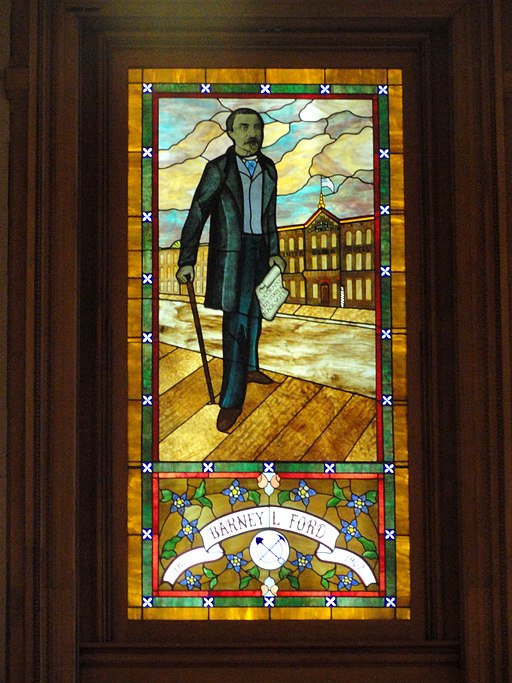
    Barney Lancelot Ford died in 1902 in Denver at the age of 80. Ford was inducted into the Colorado Business Hall of Fame and the Colorado Black Hall of Fame, and he was honored with a stained glass portrait in the House Chamber of the Colorado State Capitol building. While many of the buildings he once owned have been torn down, both the original site of the People’s Restaurant at 1514 Blake Street in Denver and his Victorian cottage on Washington Street in Breckenridge still stand. The little yellow Victorian cottage is now the Barney Ford Museum, which visitors can tour daily.

    Photo of the Barney Ford stained glass portrait located in the House Chamber in the Colorado Capitol building.

  • Colorado Court of Appeals Clarifies Executive Session Notice Requirements

    by Jason Gelender

    The Colorado Open Meetings Law (OML), sections 24-6-401 to 402, Colorado Revised Statutes, declares that it is “a matter of statewide concern and the policy of this state that the formation of public policy is public business and may not be conducted in secret.” The OML also declares that “[a]ll meetings of two or more members of any state public body” or of “a quorum or three or more members of any local public body, whichever is fewer, at which any public business is discussed or at which any formal action may be taken are … public meetings open to the public at all times.”

    However, the OML includes an exception to the general open meetings requirement, allowing state and local public bodies to consider specified types of matters in a closed “executive session” if certain requirements are met. The OML has substantially similar notice of executive session requirements for both state and local public bodies. It requires a state or local public body to identify the particular matters to be discussed in an executive session “in as much detail as possible without compromising the purpose for which the executive session is authorized.”

    During four public meetings held in 2016, the Basalt town council went into executive sessions to discuss matters related to four topics for which the OML allows executive session discussion: property interests, receipt of legal advice on specific legal questions, determination of negotiating positions, and addressing of personnel matters. In its required public notices of the executive sessions (notices), the town council simply cited the appropriate statutory authority and generic purposes (e.g., receiving legal advice) for the executive sessions without providing any information about what property interests, legal advice, negotiations, or personnel matters would be discussed.

    Plaintiff Theodore Guy applied to the district court for an order declaring that the notices failed to adequately identify the particular matters to be discussed as required by the OML and requiring disclosure of the records of the executive sessions. The district court granted plaintiff the requested relief with respect to the matters relating to property interests and negotiations but concluded that the notices were not required to include any specific information about the legal and personnel matters because of the nature of the attorney-client privilege and the subject employee’s privacy interests. Guy appealed.

    In Guy v. Whitsitt,1 the Colorado Court of Appeals reversed the district court and held that the notices had not provided adequate notice of the legal and personnel matters. With respect to the legal matters, the court of appeals concluded that it was possible, without compromising the purpose of the executive session, and therefore legally required, for the notices to have identified at least the subject matter of the legal matters to be discussed because the attorney-client privilege does not ordinarily prevent mere identification of the subject matter of an attorney-client communication. With respect to the personnel matters, the court of appeals concluded that the notices were required to at least identify the subject employee because: (1) a public employee has a narrower expectation of privacy than other citizens; and (2) the town’s argument that disclosure could violate the terms of its employment contract with the employee was not relevant because a town may not, by contract, evade its statutory obligations.

    The upshot of this decision is that it is now clear that when a public body (e.g. a legislative committee) gives notice that it intends to consider a matter in an executive session, the OML requires that it do more than simply cite the applicable statutory authority and generically state an authorized purpose such as “receiving legal advice” or “addressing a personnel matter.” The public body must instead at least identify the person who is the subject of a personnel matter or the “subject matter” about which it is receiving legal advice.

    For more general information about the OML and executive sessions, please see the Legisource article “The 411 on Executive Session under the Colorado Open Meetings Law.”2

    1. https://caselaw.findlaw.com/court/col-crt-app-div-i/2069898.html ↩︎
    2. https://legisource.net/2018/03/15/the-411-on-executive-session-under-the-colorado-open-meetings-law/ ↩︎
  • Colorado’s $tate Budget Process

    by Carolyn Kampman, Kate Watkins, and Patti Dahlberg

    Editor’s note: This article was originally posted on March 23, 2018, and has been edited as appropriate.

    Most people associate the state budget process with a couple of long weeks during the legislative session. True, the annual General Appropriations Bill or “Long Bill” must be introduced and passed between the 76th and 94th days of session per the legislative rules, but that is only part of the state’s annual budget story. The annual passage of the Long Bill marks the completion of an extensive and collaborative effort on the part of legislators, legislative staff, executive and judicial branch departments, and the governor’s office to pass a balanced budget for the citizens of Colorado.

    Each year, Colorado’s budget process begins long before the legislative session convenes. In the summer, most executive branch departments submit budget proposals to the Governor’s Office of State Planning and Budgeting (OSPB). The OSPB reviews the proposals and makes adjustments based on the governor’s priorities and the anticipated amount of money available.

    These executive departments then submit the approved budget requests to the General Assembly’s Joint Budget Committee (JBC) by November 1. The eight judicial agencies and the executive branch departments that are overseen by an elected official (the Attorney General, the State Treasurer, and the Secretary of State) also submit their budget requests to the JBC by November 1. The JBC staff review these requests and prepare written briefings that they present to the JBC in November and December. The JBC conducts formal public hearings with each department a week or two after the JBC staff briefing to discuss department budget priorities, operations, effectiveness, and future planning.

    All JBC budget briefings, hearings, and other meetings are open to the public, broadcast over the internet, and recorded and archived.1 The JBC does not accept public testimony during budget hearings, but they may allow public testimony in other hearings. The JBC encourages other legislators to participate in briefings and hearings. In addition, the JBC meets with each committee of reference during the first month of the legislative session to discuss department budget requests.

    From December through mid-February, the Capital Development Committee (CDC) and the Joint Technology Committee (JTC) review capital construction and information technology project requests and priorities from OSPB and hold hearings with departments on their requests. The CDC and JTC prioritize requests, finalize recommendations, and notify the JBC. The JBC ultimately reviews these recommendations and incorporates them into the proposed Long Bill.

    From January through March, JBC analysts present department budget requests at JBC meetings and make recommendations regarding budget amounts, funding sources, and possible legislation needed to implement certain budget actions. The JBC votes on each department’s budget request and then invites departments to submit “comeback” requests to ask the JBC to reconsider specific budget decisions. Throughout the first half of the legislative session, the JBC meets almost daily to review, adjust, and reset line item appropriations to each department. Economic forecasts and other reports, department budget requests, and budget recommendations from the governor’s office help the JBC and its staff develop a “balanced budget” proposal, which includes the Long Bill and legislation included with the Long Bill, as well as bills introduced by other legislators. To do this, the JBC picks a budget forecast in March, either the Legislative Council staff’s or the OSPB’s, to budget to.

    Introduction of the Long Bill alternates between the House of Representatives, in even years, and the Senate, in odd years. The bill is typically 300+ pages and often the JBC introduces several additional bills as part of a “long bill budget package.” This is necessary because, under the state constitution (Article V, Section 32), the Long Bill can only include appropriations; it cannot include substantive changes to the statutes. So, if the JBC makes budgeting decisions that require a change to a statute, they have to introduce a separate bill to accomplish that change. For example, if the JBC decides to appropriate a certain amount for a program, but wants to improve the efficiency with which the money is distributed, the committee will introduce a bill to change the statutory distribution method.

    Once the Long Bill and any associated bills are introduced, all work in that chamber revolves around passing those bills. Committee of reference meetings and other floor work is minimized so that the legislators can meet in their party caucuses to listen to JBC presentations on the Long Bill, ask questions, and discuss amendments to the bill. It usually takes about one week for the Long Bill and its associated bills to pass each chamber. Because the second chamber almost always amends the Long Bill, a third week is required for a conference committee, which is traditionally composed of the JBC members, to meet and recommend a report that resolves the differences between the two chambers. Each chamber must then adopt the report and readopt the final version of the bill.

    After the Long Bill passes both chambers it goes to the governor to sign into law. The governor can exercise the line-item veto to veto an entire appropriation; the governor cannot use the line-item veto to increase or decrease an amount. If there are vetoes, the bill returns to the General Assembly to consider the vetoes and possibly override one or more of them.

    Once the Long Bill passes both chambers, the funding for existing programs and services is finalized and the General Assembly knows how much money is available for bills to create new programs or offer additional services. The House and Senate appropriations committees start meeting in earnest to pass or postpone indefinitely (PI) bills, many of which have been languishing in those committees awaiting passage of the Long Bill. The General Assembly tries to ensure that the total amount appropriated through the Long Bill and all enacted bills that fund new programs or services does not exceed the amount of revenue that the state is expecting to have available in the coming fiscal year.

    A more comprehensive explanation of Colorado’s budget process is available on the Joint Budget Committee Staff homepage2 through the budget process and budget documents links.

    Legislative Council staff, in conjunction with JBC staff, launched a webpage dedicated to the state budget and the state budget process, “Explore the Colorado State Budget”.3 In addition to explaining the budget process and timelines, this new webpage also illustrates the state’s operating budget, budget sources, major funding requirements, state revenue sources, TABOR’s interaction with the state budget, and other budget resources and considerations. This new webpage is updated, as needed, with pertinent budget details.

    1. https://sg001-harmony.sliq.net/00327/Harmony/en/View/UpcomingEvents/20201125/54 ↩︎
    2. https://content.leg.colorado.gov/agencies/joint-budget-committee ↩︎
    3. https://content.leg.colorado.gov/explorebudget/ ↩︎
  • Leftover Campaign Money: What can I do—and not do—with it?

    by Bob Lackner

    Congratulations! The election is over and you’re now a member of the General Assembly! You know the official salary for the job will hardly compensate you in full for the many official duties you’ll be undertaking, and you also know the state won’t pay for a lot in terms of funding your office or hiring staff. You likely have campaign funds remaining after the election and know there are probably some rules addressing the use of such money (after all, as you know from your campaign, there is never any shortage of rules governing the use of campaign money), but you don’t know what they are.

    For starters, this is a nice problem to have. As we will see, the law allows elected officials to use leftover campaign funds for a number of specified and beneficial purposes—and having leftover campaign money certainly gives an advantage over elected candidates who finish the election without these additional resources. In addition, the rules in this area are mostly clear and concise.

    The legal term for leftover campaign money is “unexpended campaign contributions.[1] This year, the 2020 election cycle ends on December 3, 2020. A candidate committee’s unexpended campaign contributions will be the amount of money the committee has on hand as of the first day of the new election cycle, or December 4, 2020, less any unpaid obligations the candidate committee has incurred as of that date.

    Rules governing the use of campaign contributions are specified in the Fair Campaign Practices Act (FCPA).[2] As a threshold matter, the amount of money a candidate committee may retain after the end of the election is subject to an important restriction found in the campaign finance requirements of article XXVIII of the Colorado Constitution (Article XXVIII). Under Article XXVIII, the amount of any unexpended campaign contributions retained by a candidate committee on the first day of the new election cycle is treated as a contribution by a political party, regardless of the original source of the contributions, for purposes of the limit on political party contributions in that election cycle. This means that all unexpended campaign contributions that a candidate retains at the beginning of the new election cycle convert, or are “morphed,” into political party contributions.

    To make things more complicated and challenging, under current campaign contribution limits, for the election cycle that begins on December 4, 2020, a political party cannot contribute more than $24,425 to Senate candidates and $17,625 to House candidates.[3] On December 4, 2020, if a candidate committee retains unexpended campaign contributions in an amount that exceeds the limits for Senate and House candidates, respectively, the candidate committee will be in violation of the law because it will have, on that date, accepted more in contributions from a political party than is permissible. A candidate committee in that position must spend down enough of the unexpended campaign contributions so that the amount retained on December 4, 2020, is below the applicable limit.

    The statute classifies permitted uses of unexpended campaign contributions in two groups. Under the first group,[4] unexpended campaign contributions may be:

    • Contributed to a political party;
    • Contributed to a candidate committee established by the same candidate for a different public office in accordance with the applicable campaign contribution limits as long as the candidate committee making the contribution is terminated no later than 10 days after the contribution is made;
    • Donated to a charitable organization recognized by the Internal Revenue Service; or
    • Returned to the contributors or retained by the committee for use by the candidate in a subsequent campaign.

    In addition to the uses described above, a person elected to office may also use unexpended campaign contributions for any of the following additional purposes:[5]

    • Voter registration;
    • Political issue education, which includes obtaining information from or providing information to the electorate;
    • Postsecondary educational scholarships;
    • To defray reasonable and necessary expenses related to mailings and similar communication to constituents; or
    • To pay expenses that are directly related to the candidate’s official duties as an elected official, including, without limitation, expenses for purchasing or leasing office equipment and supplies; room rental for public meetings; necessary travel and lodging expenses for legislative education expenses such as seminars, conferences, and meetings on legislative issues; and telephone and pager expenses.

    The Office of Legislative Legal Services (OLLS) refers to the last provision as the “catch-all” provision because, by its very terms, it permits the use of unexpended campaign contributions for “any expenses that are directly related to such person’s official duties as an elected official….” This is the provision we consult to research a contemplated use of unexpended campaign contributions that is not explicitly addressed in the statute. Questions involving use of the “catch-all” provision typically hinge on how direct the connection is between the contemplated use of the money and the member’s official duties as a legislator.

    If the use of the money is directly connected to a task enabling the member to perform his or her duties as a legislator, the OLLS is likely to recommend that the use conforms to the statutory requirements. For example, the OLLS has regularly advised members that they may use unexpended campaign contributions to retain one or more legislative aides.

    A candidate committee for an officeholder who does not run for reelection or is not reelected or for a person who is not initially elected to office must use all unexpended campaign contributions retained by the committee no later than nine years after the date the officeholder’s term ends or after the date of the election at which the unelected person was on the ballot, whichever is later.[6] As with any other form of campaign expenditure, a candidate committee must disclose the use of unexpended campaign contributions in its regular campaign finance disclosure reports required to be filed by law.[7]

    If you are a member of the Colorado General Assembly, we encourage you to contact the OLLS if you have any questions about the propriety of using unexpended campaign contributions for a particular purpose. Additional information on this topic is provided in a document on the Colorado General Assembly’s website entitled “Frequently asked questions and answers involving the conversion or use of unexpended campaign funds.” In accordance with our customary recommendations on these matters, we also encourage legislators with questions to seek the advice and counsel of the Colorado Secretary of State’s Office as the body charged by law with the administration and enforcement of the state’s campaign finance laws.


    [1] The campaign and political finance provisions of the state constitution define “unexpended campaign contributions” to mean “the balance of funds on hand in any candidate committee at the end of an election cycle, less the amount of all unpaid monetary obligations incurred prior to the election in furtherance of such candidacy.” See article XXVIII, section 2(15) of the Colorado Constitution.

    [2] The FCPA is codified in article 45 of title 1, C.R.S. The section of the FCPA that addresses unexpended campaign contributions is § 1-45-106, C.R.S.

    [3] See Rule 10.17(h) of the Secretary of State’s Rules Concerning Campaign and Political Finance.

    [4] § 1-45-106 (1)(a)(I)(A)–(D), C.R.S.

    [5] § 1-45-106 (1)(b)(I)–(V), C.R.S.

    [6] § 1-45-106 (1)(a)(III), C.R.S.

    [7] In general, these disclosure requirements are specified in § 1-45-108, C.R.S.

  • Third Reading – Overview of Rules

    by Julie Pelegrin

    Editor’s note: This article was originally posted March 6, 2014, and has been edited as appropriate.

    The legislator’s bill has passed the committee of reference, passed the Committee of the Whole on second reading, and is finally calendared for third reading and final passage. There are fewer third-reading rules to learn, but knowing these rules is crucial if the bill sponsor wants to ensure that the bill safely finishes its journey through the House or the Senate.

    Voting on Third Reading

    Art. V, section 22, Colorado Constitution1

    House Rules 20(a)(1)2 and 33(c) and (d)3

    Senate Rules 17(f)(1)4 and 25(b)5

    The state constitution and the legislative rules impose several requirements on the third reading process. Article V, section 22 of the Colorado Constitution requires that second and third reading take place on different days. For example, if a bill passes second reading on Monday, it cannot be considered on third reading until Tuesday at the earliest. Because of this requirement, it takes at least three days – from introduction in the first house through final passage in the second house – for the Colorado General Assembly to pass a bill. In the final three days of the regular legislative session, if a bill has not passed on second reading in the first house by the end of the 118th day, the bill is considered dead because it cannot constitutionally pass by the end of the legislative session.

    To pass on third reading, a majority of the elected members of the House and the Senate must approve the bill, and the third reading vote must be recorded in the House and Senate journals. This requirement leads to the Rule of 33, 18, and One: To pass, a bill must receive at least 33 aye votes in the House, 18 aye votes in the Senate, and the Governor’s approval, either explicit or implied.

    The constitution and the rules of the House and the Senate also require that all substantial amendments to a bill must be printed and distributed to the legislators before the third reading vote. Both houses implement this requirement by creating the engrossed version of the bill that includes all of the amendments adopted on second reading in the first house and the revised version of the bill that includes all of the amendments adopted on second reading in the second house. When a chamber votes on a bill on third reading, it is voting to adopt the engrossed version or the revised version of the bill, depending on whether the third reading vote occurs in the first or second house.

    Third reading consent calendar – Senate only

    Senate Rule 25A(c) and (d)6

    In the Senate, if a bill passes on the second reading consent calendar, it is placed on the third reading consent calendar for consideration on the next day of actual session. A senator may object to having the bill on the consent calendar at any time before the bill passes on third reading, in which case the bill is removed from the consent calendar and placed on the third reading calendar for the next day of actual session.

    Senators cannot substantially debate bills that are on the third reading consent calendar, and they will not consider substantive third reading amendments to any of these bills. The Senate takes a single vote on all of the bills on the third reading consent calendar, but each senator has the opportunity to vote no on each bill. The yes and no votes are recorded in the Senate journal separately for each bill.

    The House does not use a consent calendar.

    Third reading procedures

    House Rules 13(d); 23(h)(3); 27(b); 27A(a) and (c); 29(k); and 337

    Senate Rules 9(d); 11; 17(f)(15); 22A(b); 24A(a) and (c); 25(b), (k), and (m); and 31(f)8

    Decorum. When the House or the Senate is considering bills on third reading, a legislator may not introduce any visitors in the gallery or chambers. During third reading in the House, representatives cannot use electronic devices to send or receive voice or data communications, including emails, texts, and tweets. And it’s worth noting that senators and representatives cannot use cell phones for voice communications at any time in the Senate chambers or House chambers.

    Motions. All of the bills on third reading are read by title only unless a legislator requests that the bill be read at length. On third reading, a legislator may move to:

    • Strike the enacting clause of the bill, which kills the bill;
    • Amend the bill, which requires the permission of a majority of the representatives or senators;
    • Adopt the bill;
    • Refer the bill back to a committee of reference;
    • Lay the bill over for consideration on a later date; and
    • In the House, refer the bill back to second reading for consideration of a substantial amendment to the bill.

    Third reading amendments. To offer an amendment on third reading, a legislator must first move for permission to offer the amendment. If a majority of the representatives or senators grants permission by voting yes on the motion, then the legislator can move for the adoption of the third reading amendment. The votes on each third reading amendment are recorded in the House and Senate journals whether the amendment passes or fails.

    On third reading, the House and the Senate typically consider only technical amendments to correct a drafting oversight or error. Sometimes, however, a legislator finds that he or she needs to substantially amend a bill on third reading. In the House, if a representative wants to offer a substantial amendment on third reading, he or she must move to refer the bill back to second reading to consider the amendment. Except during the last three days of the session, a substantive amendment is not in order on third reading in the House. In the Senate, a senator must have the amendment printed and placed on the desk of each senator, and the bill and amendment are laid over for consideration until the next day of actual session.

    Limits on speaking. On third reading, the House and Senate rules limit the number of times and the length of time that legislators may speak on a question – in most cases an amendment or a bill. These rules are somewhat different for the House and the Senate.

    In the House, most representatives may speak only twice on each bill or amendment. But the chairman of the committee of reference to which a bill was assigned and the representative who moves the bill or amendment may speak more than twice. Regardless of how many times a representative speaks, however, the representative cannot speak longer than a total of 10 minutes on each bill and each amendment.

    In the Senate, most senators are also limited to speaking only twice on each bill, but the bill sponsor may speak more than twice. And each senator is limited to ten minutes each time he or she speaks on the bill.

    Second house sponsors. Before a bill can be heard on third reading in the first house, the bill sponsor must designate a prime sponsor for the bill in the second house. The Chief Clerk of the House and the Secretary of the Senate have forms that the legislators must complete and turn in to the House or Senate front desk before the bill can be heard on third reading.

    Cosponsors. Immediately after a bill passes on third reading, legislators may add their names as cosponsors of the bill or request that their names be removed as cosponsors.

    Once a bill passes on third reading in the first house, the bill, including any amendments adopted on third reading, becomes the reengrossed bill and it is sent to the second house for consideration. When the bill passes on third reading in the second house, the bill, including any amendments adopted on third reading, becomes the rerevised bill. If the second house amends the bill, the rerevised bill is returned to the first house for consideration of the second house amendments. If the second house does not amend the bill, the bill is engrossed, signed by the Speaker of the House of Representatives, the Chief Clerk of the House, the President of the Senate, and the Secretary of the Senate, and sent to the Governor, who decides whether to sign the bill, veto the bill, or allow the bill to become law without a signature.

    1. https://advance.lexis.com/search?crid=c323e1ff-c718-4098-8e01-48dd697da9e5&pdsearchterms=Colo.%20Const.%20Art.%20V%2C%20Section%2022&pdbypasscitatordocs=False&pdsourcegroupingtype=&pdmfid=1000516&pdisurlapi=true ↩︎
    2. https://www.leg.state.co.us/inethsr.nsf/Rule.xsp?id=HSERULES.20&catg=House&pg=2.0 ↩︎
    3. https://www.leg.state.co.us/inethsr.nsf/Rule.xsp?id=HSERULES.33&catg=House&pg=4.0 ↩︎
    4. https://www.leg.state.co.us/inethsr.nsf/Rule.xsp?id=SENRULES.17&catg=Senate&pg=2.0 ↩︎
    5. https://www.leg.state.co.us/inethsr.nsf/Rule.xsp?id=SENRULES.25&catg=Senate&pg=3.0 ↩︎
    6. https://www.leg.state.co.us/inethsr.nsf/Rule.xsp?id=SENRULES.25A&catg=Senate&pg=3.0 ↩︎
    7. https://www.leg.state.co.us/inethsr.nsf/HomePage.xsp ↩︎
    8. https://www.leg.state.co.us/inethsr.nsf/HomePage.xsp ↩︎
  • Second Reading and the Committee of the Whole – Overview of Rules

    by Julie Pelegrin

    Editor’s note: This article was originally posted February 20, 2014, and has been edited as appropriate. We will post the fourth article in two weeks.

    The Merriam-Webster online dictionary defines “committee of the whole” as “the whole membership of a legislative house sitting as a committee and operating under informal rules.” But just what are those rules and how informal are they?

    Committee of the Whole

    House Rule 321
    Senate Rule 282

    Second reading begins with a motion that the body resolve itself into the Committee of the Whole for consideration of either general orders or special orders. In the Senate, the motion may also be for consideration of general orders – consent calendar (see explanation below). When the motion passes, the Speaker of the House or the President steps down and selects a legislator to preside over the Committee of the Whole. The chair of the Committee of the Whole has all of the powers of the Speaker or the President that are necessary to conduct the business of the Committee. By rule in the House and by custom and practice in the Senate, the chair of the Committee of the Whole does not vote except to break a tie.

    The procedural rules of the House and the Senate apply to the proceedings of the Committee of the Whole, except:

    • A legislator may speak more than twice on the same subject;
    • A legislator may not call for the ayes and noes, (i.e., a recorded vote), but a legislator may request a standing vote, known as a division, before the chair announces the outcome of the vote;
    • There’s no appeal from a decision of the chair; and
    • In the House, by rule, a motion for the previous question, which would cut off debate, and a motion for reconsideration are not in order. This also is true in the Senate, but by custom and practice, not by rule.

    The Committee of the Whole may amend a bill, pass a bill, reject a bill, refer a bill to a committee of reference, or lay a bill over for consideration on another day. All votes taken by the Committee of the Whole are voice votes, unless a Representative or Senator calls for a division before the chair of the Committee of the Whole announces the vote. In that situation, the chair takes a standing vote, first of all those in favor of the amendment or bill, and second of all those opposed to the amendment or bill. The greater number standing carries the vote. Voice votes and votes taken on division are recorded only as pass or fail; the actual names or numbers of Representatives or Senators voting on each side are not recorded.

    Consent Calendar – Senate only

    Senate Rule 25A3

    The Senate can deal with several bills on second reading with a single vote by using the consent calendar. The consent calendar is used only for noncontroversial bills that do not require substantial debate or substantive floor amendments. The Majority Leader, after consulting with the Minority Leader, decides which bills are placed on the consent calendar, usually based on recommendations by committees of reference. Once a bill is placed on the consent calendar, if a Senator objects at the microphone to including the bill on the consent calendar, the bill is removed from the consent calendar and placed at the end of the general orders calendar for that day.

    The Committee of the Whole considers the bills on the consent calendar just like the other bills, except there is no substantial debate or substantive floor amendments allowed on consent calendar bills, and the Committee of the Whole takes a single vote on the consent calendar, which adopts or rejects all of the consent calendar bills on second reading.

    The House does not use a consent calendar.

    Amendments in the House – Settled Questions

    House Rules 28, 32(c), and 344

    In the House, if the Committee of the Whole takes final action on a bill, an amendment, or a committee of reference report, either by adopting or rejecting it, the same Committee of the Whole cannot take a later action that would defeat or resurrect the same bill, amendment, or committee of reference report. This is known as the “settled question” rule, and it prevents the Committee of the Whole from amending the same language twice or from amending language that the Committee has already approved.

    Because of the settled question rule, when a bill sponsor moves a bill in the House, he or she must first move the bill, then the first committee report, and then the second committee report, if there is one. The House will then consider any amendments to the second committee report before adopting or rejecting the report, then any amendments to the first committee report before adopting or rejecting the report, and finally any amendments to the bill before adopting or rejecting the bill. If a Representative has an amendment to the first committee report, and that report has already been adopted, the amendment is a settled question and the chair will likely rule that the amendment is out of order.

    Each amendment must relate to the same subject as the original bill. If a Representative offers an amendment to a pending amendment or offers a substitute amendment to a pending amendment, the offered amendment must be germane to the subject of the pending amendment. For example, if a Representative offers an amendment to change the amount of a fee in the bill, another Representative cannot offer an amendment as a substitute to the pending amendment that would change the date on which the bill takes effect. But another Representative may offer a substitute amendment to the pending amendment to strike the fee requirement from the bill.

    Each substantial amendment must be printed and distributed to the House members. In practice, this means that, if a Representative wants to offer an amendment that is longer than a page, the Representative must turn the amendment in to the Chief Clerk of the House no later than 4:30 p.m. the day before the bill is heard on second reading. During the Committee of the Whole, a Representative may move to lay a bill over so that the amendments that have been offered on the bill can be printed and distributed to the members.

    An amendment to strike out the enacting clause of a bill takes precedence over any other motion relating to a bill. The amendment opens the question of passage of the bill to general debate and, if the amendment passes, the bill is dead.

    Amendments in the Senate

    Senate Rules 55 and 25(h)6

    In the Senate, to offer an amendment to a bill in the Committee of the Whole, a Senator must have the amendment typed and must turn it in to the Secretary of the Senate, who numbers each amendment in the order in which it is received.

    The settled question rule does not exist in the Senate. The Committee of the Whole in the Senate can amend the same language in a bill multiple times, and the last amendment that the Committee adopts is the one that is enrolled into the bill for consideration on third reading.

    When a Senator presents a bill to the Committee of the Whole, he or she moves the bill and then moves the first committee report and the committee either adopts or rejects the first committee report. If there are other committee reports, the bill sponsor moves each of those reports, and the Committee either adopts or rejects each report when it is moved. Then the Senators individually move their amendments, whether to one of the committee reports or to the bill, in the order that each amendment was turned in to the Secretary. The Committee must consider every amendment that is turned in to the Secretary unless the sponsoring Senator withdraws the amendment.

    As in the House, an amendment to strike the enacting clause takes precedence over other amendments to a bill. Passage of an amendment to strike the enacting clause kills the bill.

    Updated Fiscal Notes

    House Rule 32A(c)7
    Senate Rule 25(e)8

    In the Senate, upon the request of five or more members, the legislative council staff will update the fiscal note for a bill that may have a significant effect on the revenues, expenditures, or fiscal liability of the state. If requested, the bill cannot pass on second reading until the fiscal note is updated.

    In the House, a request for a revised fiscal note requires at least 10 Representatives. As in the Senate, once the updated fiscal note is requested, the bill cannot be considered on second reading until the updated fiscal note is prepared.

    Committee of the Whole Report

    House Rule 329
    Senate Rules 17(e), 17(f)(1), 25(f), 28(e), and 28 (g)10

    Once the Committee of the Whole completes its work, a person – usually the majority leader – moves that the Committee rise and report. If the Committee isn’t actually done, but is taking a break and coming back on the same day or on the following day, the majority leader will move to rise and report progress and beg leave to sit again. Both motions are decided without debate. If the motion is to report progress and sit again, when the Committee returns, it resumes its work where it left off.

    When the Committee of the Whole finishes and rises and reports, the actions the Committee took on every bill that it considered, including the amendments adopted on each bill, are summarized in the report of the Committee of the Whole. The person who chaired the Committee moves that the House or the Senate, as the case may be, adopt the report of the Committee of the Whole.

    The report of the Committee of the Whole is similar to a report from any other committee – the body that adopts the report can amend it. In the case of the Committee of the Whole report, an amendment to the report reverses the action that the Committee took with regard to a bill or amendment. For example, a legislator may move to amend the Committee of the Whole report to show that a bill or amendment that the Committee passed did not pass. Or a legislator may move to amend the report to show that a bill or amendment that the Committee rejected did pass. In the Senate, a Senator may move an amendment to the Committee of the Whole report to show that an amendment that was not actually offered in the Committee of the Whole passed. The House will only consider amendments to the Committee of the Whole report that affect amendments on which the Committee voted.

    Each amendment to the Committee of the Whole report and the report itself requires the affirmative vote of a majority of the elected members to pass: 33 votes in the House and 18 votes in the Senate. Each legislator’s vote on an amendment to the Committee of the Whole report and on the report itself is recorded. In the Senate, a Senator may request a recorded roll call vote on any individual bill that is included in the Committee of the Whole report.

    Each bill that passes on second reading is then engrossed or revised and calendared for consideration on third reading. Engrossing, which occurs in the first house of introduction, and revising, which occurs in the second house of introduction, means that all of the amendments to the bill that are included in the adopted Committee of the Whole report are typed into the bill to create a new version of the bill: The engrossed version in the first house of introduction and the revised version in the second house of introduction. It is important to note that, after second reading, the operative version of a bill in the first house is the engrossed version, regardless of whether it was amended. Similarly, the operative version in the second house is the revised version, regardless of whether it was amended.

    Reconsideration

    House Rules 3211 and 35(d)12
    Senate Rule 1813

    In the House, a Representative cannot move to reconsider a decision made by the Committee of the Whole. And an amendment to the Committee of the Whole report and adoption or rejection of the Committee of the Whole report and any bill included in the report are not subject to reconsideration.

    In the Senate, a Senator cannot move to reconsider a decision made by the Committee of the Whole. However, a Senator can give notice of the intent to move to reconsider or move for immediate reconsideration of an action taken on an amendment to the Committee of the Whole report, the adoption or rejection of the Committee of the Whole report, or the adoption or rejection of a specific bill included in the Committee of the Whole report. For more information on reconsideration, see the LegiSource article: “The Four W’s and One H of Reconsideration of a Previous Vote.”14

    1. https://www.leg.state.co.us/inethsr.nsf/Rule.xsp?id=HSERULES.32&catg=House&pg=4.0 ↩︎
    2. https://www.leg.state.co.us/inethsr.nsf/Rule.xsp?id=SENRULES.28&catg=Senate&pg=3.0 ↩︎
    3. https://www.leg.state.co.us/inethsr.nsf/Rule.xsp?id=SENRULES.25A&catg=Senate&pg=3.0 ↩︎
    4. https://www.leg.state.co.us/inethsr.nsf/HomePage.xsp ↩︎
    5. https://www.leg.state.co.us/inethsr.nsf/Rule.xsp?id=SENRULES.05&catg=Senate&pg=1.0 ↩︎
    6. https://www.leg.state.co.us/inethsr.nsf/Rule.xsp?id=SENRULES.25&catg=Senate&pg=3.0 ↩︎
    7. https://www.leg.state.co.us/inethsr.nsf/Rule.xsp?id=HSERULES.32A&catg=House&pg=4.0 ↩︎
    8. https://www.leg.state.co.us/inethsr.nsf/Rule.xsp?id=SENRULES.25&catg=Senate&pg=3.0 ↩︎
    9. https://www.leg.state.co.us/inethsr.nsf/Rule.xsp?id=HSERULES.32&catg=House&pg=4.0 ↩︎
    10. https://www.leg.state.co.us/inethsr.nsf/HomePage.xsp ↩︎
    11. https://www.leg.state.co.us/inethsr.nsf/Rule.xsp?id=HSERULES.32&catg=House&pg=4.0 ↩︎
    12. https://www.leg.state.co.us/inethsr.nsf/Rule.xsp?id=HSERULES.35&catg=House&pg=4.0 ↩︎
    13. https://www.leg.state.co.us/inethsr.nsf/Rule.xsp?id=SENRULES.18&catg=Senate&pg=2.0 ↩︎
    14. https://legisource.net/2016/03/11/the-four-ws-and-one-h-of-reconsideration-of-a-previous-vote/ ↩︎
  • Legislative Council Staff Wraps Up the 2020 Blue Book

    by Cathy Eslinger

    The Legislative Council Committee will meet tomorrow, Thursday, September 3, to review analyses of the measures that the secretary of state has certified to the 2020 general election ballot. This year’s ballot will include 11 measures, the majority of which—seven—are on the ballot because each received at least 124,632 signatures on initiative petitions. Of the remaining four, the General Assembly referred three of them to the ballot and the people referred one to the ballot by petition.

    As required by the state constitution and by statute the Legislative Council Staff (LCS) has been working for weeks to prepare the analyses to help the public understand the purpose and effect of each measure. Following the Legislative Council’s review, the LCS will mail the analyses, printed in the familiar “blue book,” to each registered-voter household in the state.

    The LCS prepares a blue book before each general election for which initiated or referred constitutional or statutory amendments or questions are certified to the ballot. The analysis of each measure includes a summary of the measure, the major arguments for and against the measure, and a brief fiscal assessment of the measure. The analysis may also include other information that can help voters understand the measure’s purpose and effect. The goal is to write an analysis that is concise, readable for a layperson, and factually correct. In even‑numbered years, state law also requires that the blue book include information about the judges who are standing for retention in the coming election. The state commission and district commissions on judicial performance prepare this information and provide it to the LCS.

    Each analysis typically goes through three drafts. But, depending on the complexity of the measure and the time available, some may require only two drafts. The LCS interviews proponents, opponents, and other stakeholders, using information provided by them, as well as information obtained through the LCS’s own research, to prepare and amend drafts.

    The LCS maintains a stakeholder mailing list of individuals who express interest in receiving drafts and posts the draft analyses on a page on the General Assembly website along with the text of each measure. Any person may file written comments for staff to consider in preparing the drafts. The staff consider all comments and proposed amendments submitted by the established deadlines, but use discretion in changing the analysis. Some of the criteria for making proposed changes to the analysis include:

    • Avoiding slogan-type language that triggers a response but does not contribute to greater understanding of the measure;
    • Ensuring that statements are verifiable statements of fact rather than mere opinion, directly applicable to the measure, and not misleading;
    • Ensuring that the language specifically strengthens or clarifies the arguments and is not repetitive;
    • Maintaining the balance of the analysis between the opposing sides; and
    • Avoiding language that is more appropriate for the campaigns conducted by the opposing sides.

    As part of the analysis, the LCS also prepares a fiscal impact statement for each measure, taking into consideration fiscal impact information submitted by various state and local agencies, proponents and opponents, and other interested persons. The blue book will include a summary of each measure’s fiscal assessment, and the full fiscal impact statement for each measure will be available on the blue book website. At a minimum, the summary must include:

    • An estimate of the measure’s effect on state and local government revenues, expenditures, taxes, and fiscal liabilities;
    • An estimate of the amount of any state and local government recurring expenditures or fiscal liabilities; and
    • For a measure that modifies the state tax laws, an estimate of the impact to the average taxpayer, if feasible.

    The LCS submits a final draft of each analysis to the Legislative Council Committee, which holds a public hearing to review the analyses. Anyone who is interested in testifying on the accuracy or fairness of an analysis may do so at this public hearing. The Legislative Council may change the language of an analysis upon a two-thirds affirmative vote of the council members. Before the public hearing, the LCS will post on the General Assembly website information for each analysis that includes the final draft, any comments and amendments submitted to the last draft mailed to stakeholders, a list of persons who had opportunity to comment on the last draft, and the text of the measure.

    Following the public hearing, the LCS mails copies of the blue book to each registered-voter household in the state no later than 30 days prior to the election. This year, the scheduled mailing date is Oct. 2. The LCS will also be mailing a Spanish language version of the book to each registered-voter household in counties identified by the U.S. Department of Justice under the federal Voting Rights Act.  In 2020, these counties include Conejos, Costilla, Denver, and Saguache. Staff contracts with a professional translation service to prepare these materials.

    In addition, when the blue book is ready for mailing, no later than September 10 this year, the LCS will post both the English and Spanish versions to the blue book page on the General Assembly website.

    If you would like more detailed information concerning the process for preparing the blue book, check the General Assembly’s website.