
Category: Committees

  • CCUSL Approves Three Commission Bills for Introduction

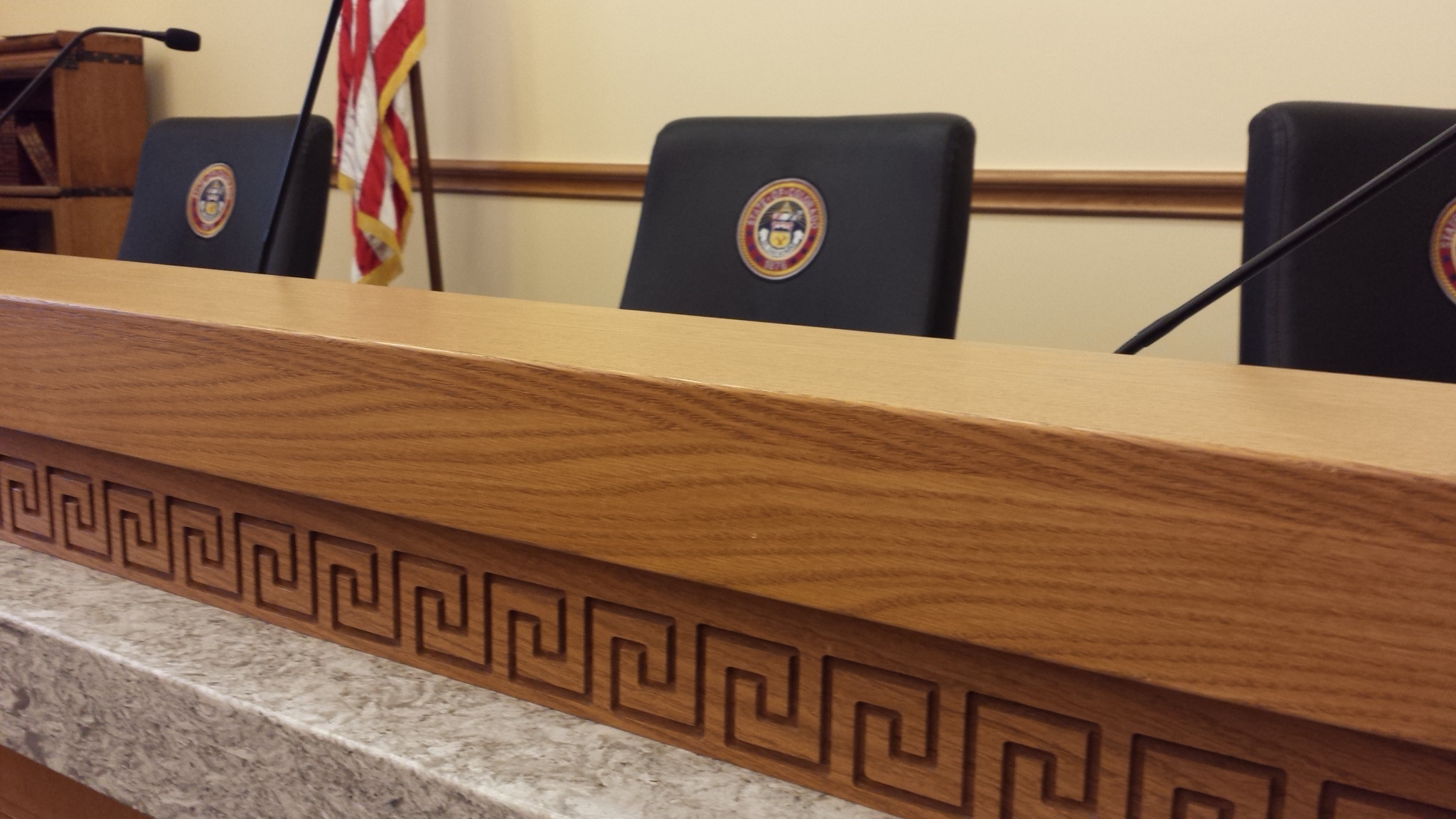
    Photo of a committee room dais in the Colorado State Capitol building.
    METADATA-START

    by Patti Dahlberg and Yelana Love

    The Colorado Commission on Uniform State Laws (CCUSL) is Colorado’s delegation to the national Uniform Law Commission (ULC). The ULC is composed of more than 300 commissioners, who are appointed by each state, the District of Columbia, the U.S. Virgin Islands, and Puerto Rico. The CCUSL meets each year to identify a preliminary legislative agenda of approved uniform acts for potential introduction in Colorado. The CCUSL then typically hosts two or three public meetings at the State Capitol to discuss its proposed legislation, listen to interested parties, and finalize its legislative agenda. The CCUSL sends advance notice of the meetings held in the Capitol to interested parties, posts meeting information on the CCUSL page on the General Assembly website, encourages public testimony at the meetings, and broadcasts the meetings over the internet.

    The CCUSL held meetings to discuss its 2026 legislative agenda on November 12, 2025, December 12, 2025, and January 13, 2026. The Commission approved three commission bills for introduction during the 2026 legislative session – two bills to enact uniform acts and one bill to add language to the previously adopted Uniform Community Property Disposition at Death Act. The three Colorado commission bills approved for introduction during the 2026 legislative session are:

    Uniform Assignment for Benefit of Creditors Act. An assignment for benefit of creditors (ABC) is a voluntary, debtor-initiated state law alternative to the bankruptcy process, state receiverships, and voluntary workouts. An assignment is a liquidation procedure in which the “assignor” voluntarily assigns all of its assets to an “assignee,” a fiduciary, which liquidates the assets and distributes the proceeds to the assignor’s creditors. The assignment operates through the creation of a fiduciary relationship with the assignor’s creditors as the beneficiaries. The Uniform Assignment for the Benefit of Creditors Act is intended to provide greater clarity and consistency to the assignment process. The act provides for a streamlined assignment process, allowing states to modernize their assignment statutes and codify aspects of common law. It sets out a straightforward process for commencing and completing an assignment and provides a scheme for distributions to the assignor’s creditors. It lays out the duties and powers of the assignor and assignee, a process for allowing and disputing claims, and limitations on liability for the assignor and assignee. 

    Uniform Mortgage Modification Act. The parties to a mortgage often agree to modify the terms of the mortgage loan or other obligation secured by the mortgage after the initial transaction is completed. However, the common law is not clear on the issue of whether the modification of a mortgage loan or other obligation secured by a mortgage affects the priority of the mortgage against junior interest holders. This lack of clarity in the law causes delay and unnecessary expense for borrowers and, in some cases, may mean that a loan is foreclosed rather than modified. The Uniform Mortgage Modification Act is meant to resolve problems and reduce uncertainty by establishing several categories of safe harbor modifications that can be made to recorded mortgages and secured obligations and outlining the implications of each type of modification. Permissible modifications under the act include changes to maturity dates, interest rates, capitalization or payment schedules, escrow or reserve requirements, and other changes that do not affect the priority of junior interest holders or are not materially prejudicial. This act aims to reduce costs and create straightforward alternatives to foreclosure when possible.

    Uniform Community Property Disposition at Death Act. Community property acquired by a married couple retains its character as community property even when the couple relocates to reside in a non-community property state. This result creates potential distribution problems at the death of the first spouse but also creates potential estate planning opportunities. However, the probate court in a non-community property state may not recognize the status of community property in a decedent’s estate. The Uniform Community Property Disposition at Death Act provides clear default rules to ensure the proper disposition of community property in any state. When this uniform act was enacted in 2023 some uniform language was inadvertently left out of the Colorado bill. This year’s commission bill adds the omitted uniform language into the Colorado statutes.
  • Committee Action this Interim

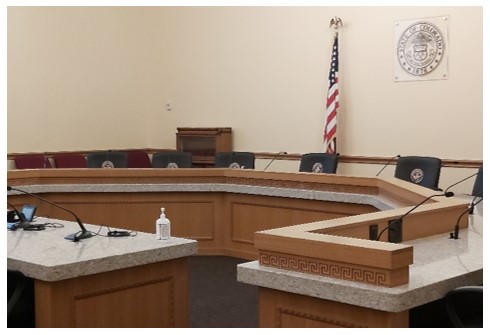
    Photo of an empty committee room.

    Because of budget constraints, the 75th Colorado General Assembly did not approve any new interim committees for this year and suspended the meetings of several current interim committees. However, many year-round and interim committees held meetings and proposed legislation this interim. We are taking this opportunity to share some information regarding the ongoing interim work performed by legislative year-round committees in addition to a handful of interim committees that did meet and propose legislation.

    Year-round, also known as standing, committees can meet during session and the interim in order to perform their legislative duties. The ones that held meetings this interim were:

    The Black Coloradan Racial Equity Study Commission, which includes legislative and non-legislative members. Its stated purpose is to study and make recommendations regarding potential historical and ongoing effects of slavery and subsequent systemic racism on Black Coloradans that may be attributed to the practices, systems, and policies of the state. It is currently working on a report on what it has learned.

    The Capitol Building Advisory Committee, which meets regularly throughout the year to review and advise regarding the Capitol building’s historic character, including its art, memorials, furniture, and architectural fixtures. The committee includes legislative and non-legislative members. Topics the committee discussed this interim include the Capitol Annex Renovation Project, the Governor’s Office Rehabilitation project, and Capitol art exhibits.

    The Capital Development Committee, which is responsible for reviewing funding requests for capital projects from state agencies and making prioritized recommendations to the Joint Budget Committee. This interim, the committee considered property transactions from several executive agencies and the Art in Public Places program, along with other funding requests. The committee is next scheduled to meet at 9 a.m. on Tuesday, December 16.

    The Colorado Commission on Uniform State Laws, which is charged with working with the Uniform Law Commission to promote uniformity in state laws where uniformity may be desirable and practicable. Although a year-round committee, the Colorado Commission, which includes legislative and non-legislative members, meets during the interim to take public testimony on uniform laws being considered for introduction in Colorado. Its next meeting is scheduled for 1:30 pm on Friday, December 12.

    The Committee on Legal Services, which meets to review legislative staff recommendations regarding executive branch agency rules. Also, as the oversight committee for the Office of Legislative Legal Services, it may be required to meet to consider other legislative or legal actions. Currently, the committee is scheduled to meet on Thursday, December 11 at 8:30 a.m.

    The Executive Committee of the Legislative Council, which provides oversight over the legislative service agencies and their directors, establishes policies regarding legislative management and procedures, and introduces the annual legislative appropriation bill. It meets at least twice during the interim, usually following a meeting of the Legislative Council, but can meet more often as legislative needs demand, such as when the Governor calls for a special session.

    The Joint Budget Committee, which is responsible for studying the management, operations, programs, and fiscal needs of the agencies and institutions of Colorado state government.  It holds a number of meetings throughout the year, with a significant number in November and December, and considers a range of documents to help prepare budget recommendations for the General Assembly. It is currently monitoring this fiscal year’s emerging budgetary needs and gathering information for the next fiscal year’s budget.

    The Joint Technology Committee, which has oversight responsibility for major state technology projects and the Governor’s Office of Information Technology. This interim, it heard technology reports and requests from several executive agencies, including the Colorado Broadband Office, Department of Labor and Employment, Department of Personnel and Administration, and Department of Corrections. Currently, it is scheduled to meet next at 9 a.m. on December 16. 

    The Legislative Audit Committee, which is responsible for reviewing and releasing audit reports and recommending special studies. It consists of four senators and four representatives with equal representation from the two major political parties. The committee is currently scheduled to meet next at 9 a.m. on Monday, December 8.

    The Legislative Council, which is the legislative oversight committee for Legislative Council Staff and is responsible for approving written requests for interim study committees during session, reviewing legislation created by interim committees meeting during the legislative interim, and reviewing the ballot information booklet prepared by Legislative Council Staff. It met on November 14 to review legislation proposals from the Transportation Legislation Review Committee, the Treatment of Persons with Behavioral Health Disorders in the Criminal and Juvenile Justice Systems, the Water Resources and Agricultural Review Committee, and the Wildlife Matters Review Committee. 

    The Water Resources and Agriculture Review Committee, which studies the conservation, use, development, and financing of Colorado’s water resources and monitors and addresses Colorado’s agricultural issues. It generally meets several times during the interim and hosts meetings in different areas of the state. This interim, it submitted three bills to the Legislative Council for approval for introduction: Agricultural Property Tax Definitions, Restrict Renewable Energy Projects in Rural Areas, and Protections for Ag Products Grown in Colorado.  

    Interim committees that met during this interim:

    The Colorado Youth Advisory Council Committee, which reviews the work of the Colorado Youth Advisory Council and recommends legislation regarding issues affecting Colorado youth. It met once this interim to consider the COYAC 2024-25 Policy Recommendations.

    The Transportation Legislation Review Committee, which reviews and initiates transportation, traffic, and motor vehicle legislation and consults with experts in the fields of traffic regulation, the licensing of drivers, the registration and titling of motor vehicles, and highway construction and planning. This interim, it considered reports from a number of organizations and submitted two bills to the Legislative Council for introduction approval: Electronic Vehicle Records and Clean Fleet Enter Replace Aging Diesel Trucks. 

    The Treatment of Persons with Behavioral Health Disorders in the Criminal and Juvenile Justice Systems, which is responsible for overseeing the Behavioral Health Disorders in the Criminal Justice System Task Force and recommending bills to implement the proposals studied by the task force. This interim, the committee submitted three bills to the Legislative Council for introduction approval: Youthful Offender System Updates, Treating People with Behavioral Health Disorder, and Modifications to Defense of Not Guilty by Reason of Insanity.

    The Wildfire Matters Review Committee, which studies wildfire prevention and mitigation. The committee submitted two bills to the Legislative Council for introduction approval: Recreate Wildfire Matters Interim Committee and CO State Forest Service Good Neighbor Authority. Note that the committee repealed on September 1 of this year.

  • The “C” in Uniform Law Commission

    Editor’s note: This article was originally written by Patti Dahlberg and Thomas Morris and posted on November 5, 2015. This version has been edited and updated for this publication.

    They come from every state, the District of Columbia, the Commonwealth of Puerto Rico, and the United States Virgin Islands and they are the “C” in the ULC – the Commissioners! Uniform Law Commission (ULC) commissioners must be attorneys and currently qualified to practice law. They are practicing lawyers, judges, law professors, legislators, and legislative staff. They are appointed by their state or territory to “research, draft, and promote” the enactment of uniform state laws. Commissioners typically serve for specific terms and receive no salaries or fees for their time or work with the ULC, thus donating literally thousands of hours of their time and expertise each year as a public service.

    Each ULC state or territorial jurisdiction determines the number of its commissioners and how they are appointed; most jurisdictions specify in statute how its commissioners are appointed. In most states, the governor appoints the state’s commissioners to serve a specified term. In a few states, ULC commissioners serve at the will of the appointing authority and have no specific term.

    The Colorado connection

    In Colorado, section 2-3-601 of the Colorado Revised Statutes creates the Colorado Commission on Uniform State Laws (CCUSL). The statute directs the General Assembly to appoint or reappoint six commissioners by joint resolution in odd-numbered years. Commissioners are appointed for two-year terms and must be currently licensed to practice law in Colorado. At least two of Colorado’s commissioners must be members of  the General Assembly and at least two of the six must be from the public at large. The director of each state’s legislative legal service office, or the director’s designee, is ex officio a member of that state’s commission. In Colorado, the director of the General Assembly’s Office of Legislative Legal Services, Ed DeCecco, appointed Yelana Love to serve in his stead. The six commissioners appointed or reappointed every other year serve on the CCUSL and with the ULC along with any Colorado citizen who is elected as a life member of the ULC (after 20 years of service). Currently, Colorado has one commissioner who has been elected as a life member: Charles Pike. You can find a list of past and current members of the CCUSL here.

    Commission work at the national level

    State uniform law commissioners come together as the ULC for one purpose—to study and review state laws to determine which areas of law should become more uniform. For more than a century, commissioners have, through various committees, prepared uniform law drafts and redrafts for review and approval at their annual meetings. Since its inception, the ULC has approved more than 200 uniform or model acts, of which more than 100 have been adopted by at least one state. Some have been widely adopted, including the Uniform Commercial Code, which every state has enacted. You can find a list of uniform acts that have been adopted by the Colorado General Assembly here.

    The ULC considers its major asset to be its commissioners. As a working organization, the approximately 350 commissioners participate in drafting specific acts; they discuss, consider, and amend drafts of other commissioners; they decide whether to recommend an act as a uniform or a model act; and they work toward enactment of ULC acts in their home jurisdictions. The procedures of the ULC are meant to promote the meticulous consideration of each uniform and model act, and generally, a minimum of four years is spent during the study, drafting, and adoption phases on each proposed act.

    The ULC can only propose uniform laws; no uniform law is effective until a state legislature enacts it. Thus, the approval of a uniform act at the annual meeting constitutes the start of the commissioners’ duties of advocating for the adoption of uniform and model acts in their home jurisdictions. Uniform laws, just like any other legislative proposal, can meet resistance, but this type of debate is considered normal and reasonable. The ULC wants to foster open discussions about the proposal on a state level.

    Information about uniform acts, drafting projects, committees, meetings, and legislation is available on the ULC’s website.

    For information on Colorado’s ULC connection, visit the CCUSL website.  


    The CCUSL is scheduled to meet on November 12, 2025, to discuss potential legislation for the 2026 session.  CCUSL meeting schedules and agendas are available on the CCUSL website.

  • Plans Continue for Sand Creek Memorial Near Capitol West Steps

    by Richard Sweetman

    On June 25, 2020, protesters pulled down the statue of the civil war soldier that stood atop the pedestal monument near the west steps of the Colorado capitol. Since that day, legislators and members of the American Indian community have discussed a replacement monument. But, to this day, the space where the civil war soldier statue once stood remains empty.

    The original plan to replace the civil war soldier with a statue of an American Indian woman mourning the events of the Sand Creek massacre was approved by the Capitol Building Advisory Committee in November 2020. The Committee based its decision on a seven-inch prototype of a statue by the artist Harvey Pratt.

    In March 2022, however, more than a year after the Capitol Building Advisory Committee sent its recommendation to Capital Development Committee, Mr. Pratt withdrew his statue from consideration. Representatives of the Northern Cheyenne and Northern Arapahoe tribes asked Mr. Pratt to make modifications to his design, and the artist declined their request. This development sent the proponents of the new monument back to the drawing board.

    On May 17, 2024, the Capitol Building Advisory Committee met again and heard testimony from the tribes’ representatives regarding the status of the memorial. During the meeting, the representatives announced that they had agreed upon a new design. A team of four individuals, including a representative from each of the two tribes, a Denver sculptor, and a project architect from the University of Denver collaborated to develop a new concept and enlist a new sculptor to execute it.

    The supporters of the new design described the proposed new sculpture as a bronze structure in the likeness of a tepee, with visible poles, to be placed on the ground rather than upon a pedestal. The new monument would be placed on a circular pad on the site of the former monument.

    The proponents estimated the cost of the new monument at somewhere between $200,000 and $300,000. They expressed their hope that the One Earth Foundation would pay the bulk of this amount, but they also indicated their hope that the Capital Development Committee and the legislature will chip in some portion of the costs to pay for site preparation.

    Sculpture mock-up for Sand Creek Memorial.

    On November 15, 2024, the proponents appeared again before the Capitol Building Advisory Committee to share a miniature prototype of the new monument. Sculptor Gerald Shippen presented a slide show that displayed the prototype from various angles and perspectives. The planned monument will depict three Native American figures standing before a tepee without any walls — only poles. The figures will be larger than life — about seven feet tall — and the poles of the skeletal tepee will be approximately 23 feet high.

    The prototype of the monument depicts an American flag hanging from the highest tepee pole, but according to Mr. Shippen, the plan is to incorporate this design element only on special occasions. For example, when the tribes hold the annual Sand Creek Massacre Spiritual Healing Run, the tribal runners will approach the west steps of the capitol and lay a ceremonial lodge pole on the tepee. The lodge pole will display a United States flag and a white flag of peace, which were the flags that Chief Black Kettle of the Southern Cheyenne had displayed on his tent on the day of the Massacre.

    The Committee voted unanimously to approve the design and recommend it to the Capitol Development Committee.

  • 2024 Interim Committee Recap – Part 2

    This is the second of two articles summarizing this year’s interim committee actions. Since the end of the last legislative session several legislative committees held public meetings to discuss topics relevant to Colorado and to recommend legislation to the Legislative Council for approval for introduction in 2025. As mentioned in the first part of this series posted last week, this article contains the summaries of the last five of 10 committees and their recommended legislation. The Legislative Council met on Tuesday, October 15, to review interim committee legislation proposals. Click here to listen to the Legislative Council meeting.

    Cell Phone Connectivity Interim Committee

    The committee met four times and attended two field trips during the interim. It heard presentations from members of the telecommunications industry, including the Wireless Infrastructure Association, the Colorado Telecommunications Association, and the Colorado Communications and Utility Alliance. The committee had four bills drafted and recommended the following three bills to the Legislative Council:

    • Bill A – Single Point of Contact Wireless Services. The bill requires the Division of Homeland Security and Emergency Management in the Department of Public Safety to develop a single point of contact within the division to help ensure statewide coverage of the integrated public alert and warning system for wireless emergency alerts and the emergency alert system, provide technical assistance, and offer recommendations to improve current wireless alert systems in Colorado that address language and access needs.
    • Bill B – Wireless Telephone Infrastructure Deployment Incentives. The bill requires the Colorado broadband office to implement a wireless telephone infrastructure grant program.
    • Bill C – Local Government Permitting Wireless Telecom Facilities. The bill establishes requirements relating to a local government’s approval of an application by a telecommunications provider for the siting and construction of a new wireless telecommunications facility or for the substantial change of an existing wireless telecommunications facility.

    Treatment of Persons with Behavioral Health Disorders in the Criminal and Juvenile Justice Systems

    The committee met three times during the 2024 interim and heard presentations from the task force and the Behavioral Health Administration. The committee requested five bills to be drafted and recommended all five bills to the Legislative Council for consideration:

    • Bill A – Deflection Supports Justice-Involved Youth. The bill makes changes to the youthful offender system related to housing arrangements and equitable treatment for youthful offenders; rehabilitative treatment and life skills programming; and clinician evaluations, tailored treatment plans, and client managers. It applies the standards for determining competency in juvenile delinquency cases to juveniles who have charges directly filed against them in adult court, juveniles whose cases are transferred to adult court, or juveniles subject to concurrent court jurisdiction. The bill imposes certain limitations on a case management plan’s contents, makes some sentencing requirements, and creates a grant program to provide defection services.
    • Bill B – Behavioral Health Crisis Response Recommendations. The bill requires the a stakeholder group be convened to identify and compile a list of existing resources and model programs that communities throughout Colorado utilize when responding to behavioral health crises and to make the resources and information about the model programs publicly available. It requires the Department of Health Care Policy and Financing, the Department of Public Health and Environment, and the Behavioral Health Administration to provide information to the General Assembly regarding the reimbursement shortages and gaps within the continuum of care and the reimbursement and funding options that are available to address the shortages and gaps.
    • Bill C – Not Guilty by Reason of Insanity Defense. When a plea of not guilty by reason of insanity is accepted by the court, the bill requires the court, in consultation with others parties, to determine whether a sanity examination requires the defendant to stay overnight for an extended examination and the number of days of the extended examination. It prohibits the court from ordering the defendant into custody in order to conduct the sanity examination and for a defendant from being dressed in prison or jail clothing or for restraints from being visible on the recording. The bill repeals the provision authorizing a narcoanalytic interview of the defendant.
    • Bill D – Complementary Behavioral Health Services in Jails Grant. Under existing law, the Behavioral Health Administration administers the jail-based behavioral health services program. The bill requires the administration to provide funding to jails to administer services that complement a person’s primary course of treatment for a behavioral health disorder to persons in custody in the jail. A jail is required to use the funding to train jail staff to administer complementary behavioral health services and to provide complementary behavioral health services to persons in custody in the jail at no cost to the person. The bill requires the General Assembly to annually appropriate up to $50,000 for the administration of complementary behavioral health services as part of the program.
    • Bill E –Competency in Criminal Justice System Services & Bail.Under existing law, when criminal charges are dismissed against a person receiving inpatient restoration services from the Department of Human Services, the department must stop providing services to the person. The bill permits the department to continue to provide services for up to 90 days after the person’s case is dismissed because the person is incompetent to proceed. It also allows the department to enter into an agreement with an organization to provide permanent supportive housing for a person whose case is dismissed because the person is incompetent to proceed, the person has been referred to the bridges wraparound care program, or has successfully completed a bridges wraparound care program. The bill states that a defendant’s competency status does not affect the defendant’s eligibility for release on bond and is not a basis for a no-bond hold or mental health stay and prohibits a court from considering competency status as a factor in setting or modifying a monetary condition of bond.

    Pension Review Commission and Pension Review Subcommittee

    The Pension Review Commission met three times during the 2024 interim. It heard presentations from the Fire and Police Pension Association; the Public Employees’ Retirement Association (PERA); PNYX Group, a contractor engaged by the Pension Review Subcommittee to conduct an independent review of assumptions used to model PERA’s financial situation; and Segal Group regarding PERA’s signal light reporting for the hybrid defined benefit plan. In addition, the commission heard proposals for legislation from the Subcommittee. The Subcommittee met three times during the 2024 interim.  It heard presentations PERA, the Association, and the PNYX Group regarding the details of its draft and final reports; and the Segal Group and AON regarding various aspects of PERA. The Subcommittee also discussed proposed legislation for the Commission’s consideration and discussed its annual reports to the General Assembly and the citizens of Colorado. The commission requested that three bills be drafted and recommended the two following bills to the Legislative Council for introduction:

    • Bill A – Income Tax Credit for PERA Retirees. The bill creates a refundable income tax credit that is available for income tax years commencing on or after January 1, 2025, but prior to January 1, 2027, for a qualifying PERA retiree, which means a full-time Colorado resident individual who is 65 years of age or older at the end of the 2025 or 2026 income tax year and has an annual federal adjusted gross income of no more than $38,000 as a single filer or $76,000 as a joint filer.
    • Bill B – PERA Risk-Reduction Measures.  The bill requires the PERA board to conduct or cause to be conducted an actuarial study of PERA and a periodic actuarial audit of PERA every 4 years and aligns the timing of the study and the audit. In addition, the bill requires the state auditor to commission an independent review of the periodic actuarial audit by experts other than those already working on behalf of PERA. The bill specifies items that the experts commissioned to conduct the independent review are required to analyze.

    Legislative Oversight Committee Concerning Tax Policy & Task Force

    The committee met three times during the interim. It heard presentations on the insurance premium tax from the Division of Insurance, the alternative transportation tax credit from the Department of Revenue and the Colorado Chamber of Commerce, the business personal property tax from the Division of Property Taxation and the Colorado Chamber of Commerce, and various other tax expenditures from the Office of the State Auditor. The committee requested ten bills for drafting and recommended the following five bills to the Legislative Council:

    • Bill A – Adjusting Certain Tax Expenditures. The bill modifies ten tax expenditures. The bill disallows the income tax credit for unsalable alcohol after December 31, 2025. The bill allows a taxpayer to deduct 1%, rather than 2%, of the taxable gallons of fuel removed from a fuel terminal for purposes of the tax imposed on gasoline and special fuel. The bill extends two income tax credits by extending the income tax credit for a purchaser who installs an energy storage system in a residential dwelling through income tax years commencing before January 1, 2027, and the reducing emissions from lawn equipment income tax credit through income tax years commencing before January 1, 2029. The bill amends a definition of “agricultural compounds” that is incorporated into the definition of “wholesale sale” used for purposes of the sales and use tax statutes. The bill also identifies the purposes of the insolvency assessments paid insurance premium tax credit, the state refund income tax deduction, the dyed special fuels and off-road fuel tax excise tax exemption, the off-road fuel use refund, and the wholesale sales exemption from sales tax and identifies how to measure if those purposes are met.
    • Bill B – Senior Housing Income Tax Credit Extension.The bill extends a refundable income tax credit that is available for the income tax years commencing on January 1, 2022, and January 1, 2024, so that the credit is also available for the income tax years commencing on January 1, 2025, and January 1, 2026.
    • Bill C – Modification Long-Term Care Insurance Income Tax Credit. For income tax years commencing on or after January 1, 2025, the bill both: increases the amount of federal taxable income a taxpayer may have and still qualify for the state income tax credit for purchasing long-term care insurance and annually adjusts that federal taxable income amount for inflation; and doubles the amount of the credit a taxpayer may claim and, for income tax years commencing on or after January 1, 2026, annually adjusts the credit amount for inflation.
    • Bill D – Income Tax Expenditures for Service Members. The bill changes how income tax expenditures benefit individuals engaged in military service. Beginning with income tax years commencing on or after January 1, 2027, it eliminates the state income tax subtraction for an amount equal to any compensation received for active duty service in the armed forces of the United States by an individual who has reacquired residency in the state to the extent that the compensation is included in federal taxable income. For income tax years commencing on or after January 1, 2027, but before January 1, 2032, the bill allows a refundable income tax credit as a form of tuition assistance to an actively serving member of the Colorado National Guard who is eligible for tuition assistance under an existing statutorily-authorized program administered by the Department of Veterans and Military Affairs.
    • Bill E – State Tax Expenditure & Grant Database.The bill creates an online database managed by the Department of Revenue that includes information on all qualifying state tax expenditures and state grant opportunities. The database must be created by December 31, 2026, and must be reviewed and updated on an annual basis.

    Transportation Legislation Review Committee

    The Transportation Legislation Review Committee had an ambitious interim that included three meetings and a one-day site tour during which it toured ten sites, including several mobility hubs and other projects and facilities that are part of the state surface transportation system. The committee heard presentations from a wide variety of agencies and groups including state transportation agencies, transportation authorities and districts that provide transportation infrastructure and services, and other diverse groups such as the American Automobile Association, Amalgamated Transit Union Local 101, Bicycle Colorado, the Colorado Association of the Chiefs of Police, the Colorado Motor Carriers Association, the Colorado Task Force on Drunk and Impaired Driving, the Cross Disability Coalition, the Denver Regional Council of Governments,  Greater Denver Transit, Green Latinos, the National Conference of State Legislatures, the Petroleum Marketers Association, the Natural Resources Defense Council, the Regional Air Quality Council, and the Utah Transit Authority. The committee recommended the following five bills to the Legislative Council:

    • Bill A – Increase Transportation Mode Choice Reduce Emissions. The bill concerns measures to increase transportation mode choices in order to reduce emissions. It establishes deadlines by which the Department of Transportation must present a statewide mode choice assessment, adopt rules establishing mode choice targets for 2030 to 2050, and present triannual reports regarding the mode choice targets to the transportation legislation review committee. It also specifies that certain entities required to prepare mode choice implementation plan include certain information about the mode choice targets, a multimodal transportation gaps summary, and an analysis of certain projected greenhouse gas emissions.
    • Bill B – Motor Vehicle Regulation Administration. The bill prohibits as vehicular document piracy the making, distributing, advertising, selling, promoting, completing, altering, or producing of a document that simulates or closely resembles an official document related to the administration of the motor vehicle or identification statutes without the express written permission of the Department of Revenue. It makes the “Uniform Power of Attorney Act” apply to the motor vehicle statutes, repeals the requirement that a service-connected disability be permanent in order for a veteran to be eligible to register a motor vehicle without paying fees, and repeals certain license plates. The bill makes changes to the statutes regarding driver’s licenses and identification documents.
    • Bill C – Local Funding for Vulnerable Road User Protection. The bill authorizes a county, city and county, or municipality or a Taxpayer’s Bill of Rights exempt enterprise created by a city, city and county, or municipality to generate additional fee-based funding for local transportation system strategies that improve safety for vulnerable road users. The fees must be based on vehicle weight and may also be based on vehicle fuel-efficiency and must be reasonably calculated based on the impacts to vulnerable road users caused by the fee payers and the costs of remediating those impacts. Fee revenue may only be expended for local transportation system strategies that improve safety for vulnerable road users.
    • Bill D – Railroad Investigative Report Confidentiality. The bill repeals a requirement that investigative reports of railroads made for the public utilities commission be kept confidential and replaces that requirement with a grant of rule-making authority to make ongoing investigations and security information confidential. The confidentiality rules must not make final reports of investigations confidential and must require the timely release of information if public knowledge of the information would protect the public safety, health, or welfare.
    • Bill E – Paratransit Services. Paratransit services are defined as complementary parallel transit services for individuals with disabilities who are unable to utilize regular or fixed route transit services for some or all of their transit needs. The bill requires any political subdivision of the state, public entity, or nonprofit corporation that provides paratransit services in the state: to establish, in coordination with local public entities providing emergency services, a plan to communicate information and provide paratransit services during emergencies; to ensure that fare collection technology for paratransit services is comparable to that offered for regular or fixed route services; and, before reducing the service area for paratransit services, to consult with affected community members and conduct an impact analysis. It creates a task force to study and make recommendations regarding the standardization of and best practices for paratransit services in the state.
  • 2024 Interim Committee Recap – Part 1

    Several legislative committees held public meetings since the end of the last legislative session to discuss topics relevant to Colorado and to recommend legislation to the Legislative Council committee for approval for introduction in 2025. This is the first of two articles summarizing this interim’s committee actions. In this article we’re providing summaries of five of 10 committees and their recommended legislation.  The Legislative Council met on Tuesday, October 15, to review interim committee legislation proposals. Click here to listen to the Legislative Council meeting.

    American Indian Affairs Interim Study Committee

    The committee met four times during the interim and heard presentations from the Southern Ute Tribe; the Ute Mountain Ute Tribe; the Denver American Indian Commission; the Truth, Restoration, and Education Commission of Colorado; the Department of Law; the Department of Natural Resources; the Colorado Commission of Indian Affairs; the Office of the Liaison for Missing and Murdered Indigenous Relatives; and American Indian community stakeholders. The meetings included public testimony and discussions related to the challenges faced by American Indian communities, including the topics concerning health disparities, judicial concerns, the Indian Child Welfare Act, water matters, and access to public services. The committee requested the drafting of six bills and recommended the following three bills to the Legislative Council:

    • Bill A – American Indian Affairs Interim Committee. The bill creates the American Indian Affairs Interim Committee with the purpose to examine issues and challenges that impact American Indian Tribal Nations. It allows the committee to meet up to six times and to recommend up to five bills during each interim. The bill also requires the committee to submit a report to the Executive Committee of the Legislative Council summarizing the work of the Committee during the preceding five years.
    • Bill B – Recognition of Tribal Court Orders. Current law does not expressly allow for the state to recognize arrest warrants or commitment orders issued by a Tribal court of a federally recognized Tribe with a reservation within the exterior boundaries of the state (Tribal court). The bill clarifies that a state court shall give full faith and credit to an arrest warrant issued by a Tribal court. Upon issuance of a Tribal court arrest warrant, a peace officer in the state may apprehend the person identified in the Tribal warrant. The bill clarifies that any commitment order entered by a Tribal court that concerns a person under the Tribal court’s jurisdiction is recognized to the same extent as a commitment order entered by a state court, including health-care provider communications.
    • Bill C – Protect Wild Bison. The bill classifies bison as big game wildlife unless the bison is livestock. This classification means that hunting or taking one is illegal unless authorized by rule of the Parks and Wildlife Commission.

    Wildfire Matters Review Committee

    The committee met five times during the 2024 interim. It heard testimony and otherwise received information from the Colorado Forest Health Council, the Colorado State Forest Service, the Department of Natural Resources, the Division of Fire Prevention and Control in the Department of Public Safety, the Department of Public Health and Environment, the Colorado Fire Commission, the Division of Insurance in the Department of Regulatory Agencies, local government representatives, and private industry stakeholders. The committee initially requested the drafting of ten bills and recommended the following five bills to the Legislative Council for consideration:

    • Bill A – Applying Artificial Intelligence to Predict, Prevent, or Assist in Fighting Wildfires. The bill requires the General Assembly to appropriate money to the Division of Fire Prevention and Control to study and develop applications of artificial intelligence that predict, mitigate, or assist in fighting wildfires. These applications must, at a minimum, produce data that can be incorporated into maps displaying classification of vegetation and wildfire fuel; predictions regarding the likelihood of wildfire ignition potential in a particular area following observed lightning events; the perimeter of an ongoing wildfire; and predictions regarding the locations and area to which an ongoing wildfire may spread.
    • Bill B – Limited Liability for Landowners Who Allow Emergency Access to Property. The bill provides immunity from civil liability for damage or injury to persons or property, other than that which arises from gross negligence or willful misconduct, to a landowner who allows access to the landowner’s property for entry and exit in connection with an emergency.
    • Bill C – Workforce Development in Natural Resources. The bill authorizes the Colorado Cooperative Extension Service to expand and implement outreach programs and initiatives to youth and young adults, in partnership with the forest health industry, local school districts, the Colorado State Forest Service, the Division of Fire Safety and Control in the Department of Public Safety, and others. The outreach programs and initiatives are intended to increase awareness and opportunities in the areas of forestry, wildland fire, and natural resources and, in future years, may include expanding 4-H programs, facilitating career and workforce readiness and entry into forest health careers. The Extension shall make annual reports and is authorized to provide need-based grants to fire service governing bodies and volunteer fire departments to fund ongoing training and create a statewide outreach program to promote fire service careers.
    • Bill D – Updating the Wildfire Information and Resource Center Website. The Division of Fire Prevention and Control is currently required to host the Wildfire Information and Resource Center website and to provide information regarding active wildfires on the website. The bill requires the website to include hyperlinks to websites that display emergency information and wildfire updates for each county in Colorado and requires the division to coordinate with county governments in order to provide the hyperlinks.
    • Bill E – Support to Increase Prescribed Burns. The bill creates the Prescribed Fire Claims Cash Fund in the state treasury, requires the treasurer to transfer $1 million to the fund, and requires the Division of Fire Prevention and Control to use the money to pay claims related to costs or damages that result from prescribed burns. It also expands the definition of a “certified burner” in the state to include an individual who has not completed the Colorado division’s training and certification program but who meets reciprocity requirements and possesses a valid Colorado certification number.

    Representative Hugh McKean Colorado Youth Advisory Council Review Committee

    The committee met three times during the interim and heard presentations from its student members about ADA-compliant school facilities, health literacy, school transportation, solar energy, youth representation on the Environmental Justice Advisory Board, community engagement on environmental matters, food waste, and opioid antagonists. The committee requested drafts of six bills and recommended the following three bills to the Legislative Council:

    • Bill A – Create Youth Health Literacy Oversight Panel. The bill creates a youth health literacy oversight panel in the Department of Public Health and Environment to identify deficits in youth health literacy and recommend improvements. The panel must recommend revisions to the elementary and secondary education standards, which the State Board of Education must in turn consider. The panel must also develop or revise a range of youth health literacy resources and submit an annual report to the General Assembly describing its work, along with related data and trends.
    • Bill B – Food Waste Reduction in Public Schools. The bill encourages local education providers to adopt policies to reduce food waste in public school cafeterias and food preparation facilities. Policies may include composting and share tables that permit students to return whole food or beverage items for redistribution to other students or local nonprofits. The bill requires the Colorado Circular Communities Enterprise to consider incentivizing public schools to develop effective composting or share table programs. The bill extends limited immunity from civil and criminal liability to schools and school personnel who supervise food and beverage redistribution.
    • Bill C – Youth Involvement in Environmental Justice. The bill adds two youth members—one voting, one nonvoting—to the Environmental Justice Advisory Board in the Colorado Department of Public Health and Environment. The bill also requires the Colorado Energy Office to develop and post on its website best practices for the adoption and financing of clean energy resources in schools. The office must periodically update the best practices and post the updates on its website.

    Sales and Use Task Simplification Task Force

    The task force met four times during the interim. It heard presentations from the Department of Revenue, the Colorado Municipal League, local government representatives, and private industry stakeholders. The meetings included public testimony and discussions relating to the electronic Sales and Use Tax Simplification System (SUTS), the state sales tax on rooms and accommodations, state-administered local lodging taxes, municipal use tax coordination efforts, and state and local sales and use tax audit processes. The task force made five bill requests and recommended two bills to the Legislative Council for introduction as follows:

    • Bill A – Local Government Tax Audit Confidentiality Standards. The bill prohibits a third-party auditor who conducts a sales or use tax investigation on behalf of a local taxing jurisdiction from divulging any information obtained from the investigation, or from any document, report, or return filed in connection with the local sales or use tax, except in certain limited circumstances, including disclosure to:
      • An official, employee, hearing officer, attorney, or other public agent of the local taxing jurisdiction who is authorized to receive such information;A requesting taxpayer, or the taxpayer’s authorized agent, of the taxpayer’s own tax filing;The Department of Revenue (department) for purposes of statistical analysis and publication as authorized by current law; andThe department and the Federal Internal Revenue Service as necessary and pertinent to a taxpayer’s compliance or failure to comply with state or federal tax law.
      • Violation of the prohibition on disclosure is a misdemeanor punishable by a fine. The bill also modifies the state-level confidentiality statute for the protection of taxpayer information to clarify that certain information may be shared governmental entities, as needed, consistent with current law.
    • Bill B – Online Search of Sales and Use Tax. The bill modifies the state-level confidentiality statute for the protection of taxpayer information to authorize and instruct the executive director of the department to allow every sales and use tax license and every sales and use tax exemption certificate to be made searchable by the name and identification number of the licensee or the certificate holder. 

    Water Resources and Agriculture Review Committee

    The Water Resources and Agriculture Review Committee, which is actually a year-round committee, met four times during the interim and heard presentations concerning orphaned mines and acid drainage, avian flu, raw milk, energy building codes in agricultural properties, foreign ownership of agricultural land, revegetation, tap fees, zebra mussels, and gray wolf reintroduction. The committee had 15 bills drafted and recommended the following eight bills to the Legislative Council:

    • Bill A – Remove Gendered Language from Title 35. The bill substitutes gender-neutral language for gendered language in title 35 of the Colorado Revised Statutes. The bill also updates archaic language in title 35.
    • Bill B – Wildlife Damaged Protection of Personal Information. Under current law, a person may file a claim with the Division of Parks and Wildlife for compensation for damages to property caused by wildlife, and the division must review and investigate that claim. The bill changes current law by requiring that the personal information of a claimant received by the division through the claim procedures and proactive nonlethal measures is kept confidential and not disclosed pursuant to the “Colorado Open Records Act”.
    • Bill C – Mining Reclamation & Interstate Compact. The bill amends the “Colorado Mined Land Reclamation Act” and the “Colorado Land Reclamation Act for the Extraction of Construction Materials” to contemplate the expedited issuance of reclamation-only permits to persons desiring to conduct reclamation-only operations after July 1, 2025, on less than five acres and to update restrictions and requirements concerning the posting and forfeiture of financial warranties relating to mine reclamation projects. The Office of Mined Land Reclamation may not issue a reclamation-only permit to a designated mining operation. The bill also enacts the “Interstate Mining Compact” and ratifies Colorado’s membership in the associated Interstate Mining Commission.
    • Bill D – Agriculture Building Exempt from Energy Use Requirements. Under current law, owners of certain large buildings (covered buildings) are required to annually collect and report each covered building’s energy use to the Colorado Energy Office. The bill clarifies that agricultural buildings are not covered buildings, and, therefore, owners of agricultural buildings are exempt from the energy use collecting and reporting requirements. The bill defines an agricultural building as a building or structure used to house agricultural implements, hay, unprocessed grain, poultry, livestock, or other agricultural products or inputs.
    • Bill E – Ranch Property Tax Clarifications. The bill broadens the definition of “ranch” for purposes of property taxation to include a parcel of land used for grazing or raising livestock for the primary purpose of obtaining a monetary profit rather than a parcel of land used only for grazing livestock for the primary purpose of obtaining a monetary profit. The bill also eliminates the limited definition of “livestock” included in the definition of “ranch” and replaces it with the general definition of “livestock” used for property tax purposes that includes all animals.
    • Bill F – Backflow Prevention Devices Requirements. Backflow is the reverse flow of water, fluid, or gas caused by back pressure or back siphonage. Under current law, individuals who are engaged in the business of installing, removing, inspecting, testing, or repairing backflow prevention devices are subject to the licensure requirements for plumbers, except when the individuals are installing or testing a stand-alone fire suppression sprinkler system. The bill exempts individuals engaged in the business of inspecting, testing, or repairing backflow prevention devices from licensure requirements but retains the licensure requirements for individuals engaged in the installation or removal of the devices.
    • Bill G – Future of Severance Taxes & Water Funding Task Force. The bill creates the Future of Severance Taxes and Water Funding Task Force. The Department of Natural Resources is required to contract and work with a third party to conduct a study on severance taxes and water funding and develop recommendations for ways to continue funding water needs in the face of decreasing severance tax revenue. The third party must submit a final report, which incorporates the input of the task force, to the Water Resources and Agriculture Review Committee.
    • Bill H – Continue Wildlife Habitat Stamp Program. Individuals applying for hunting or fishing licenses in Colorado must also purchase a Colorado wildlife habitat stamp. The Division of Parks and Wildlife in the Department of Natural Resources uses the money collected from the stamp for the benefit of wildlife habitat or access to wildlife habitat in the state. The stamp program is scheduled to repeal, subject to a sunset review by the Department of Regulatory Agencies, in 2027. The bill continues the program indefinitely.