Month: December 2020

  • Barney Ford: From Slavery to Successful Businessman

    by Ashley Athey

    If you take a drive up I-70 and visit Breckenridge, just off the main street you’ll see a little yellow Victorian house surrounded by modern restaurants and art museums. Step inside and you’ll be transported back in time to when Barney Ford was alive. But who was he? And why was he so important to our state’s history?

    Barney Ford was born into slavery in Virginia in 1822. His mother, Phoebe, prayed for her son to escape, and at the age of 17 Barney escaped his enslavement via the Underground Railroad and made it to Chicago.

    It was in Chicago that Barney met and married Julia Lyon (or Lyoni), who helped him pick out his middle and last names—as an enslaved person, he didn’t have them—and he chose Lancelot Ford. He worked as a barber and helped support the Underground Railroad and abolitionist efforts. But he dreamed of going west to California, and in 1851 the Fords set out together, traveling via ship from New York because traveling across the country as a former enslaved man was unsafe. When their ship stopped in Nicaragua, Barney and Julia went ashore and they fell in love with the area. Together they built a successful hotel and restaurant and stayed there for many years until a local civil war destroyed their businesses. The Fords left Nicaragua and, in 1860, moved to Colorado.

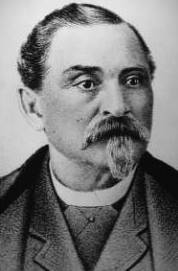
    Old photograph of Barney Ford.

    Barney Ford was one of the first people to find and put a claim on the gold deposits in the land above Breckenridge, but Colorado law forbade a Black man from owning mining claims or homesteads. After being chased away and threatened in the middle of the night, Ford opened up a barbershop on Blake Street in Denver. Barney Ford was a savvy and intelligent businessman, and he ran many other successful businesses in Denver, including the People’s Restaurant and the Inter-Ocean Hotel. He even opened a second Inter-Ocean Hotel in Wyoming.

    In 1880, Ford returned to Breckenridge and opened Ford’s Chop House, making him the first Black business owner in the town. He built a five-room house in Breckenridge for his family, and he built it without a key room – a kitchen! Instead, his family ate food from the restaurant.

    In Denver, Ford was active in politics and fighting for the rights of Black men and women. He fought for their right to vote, their right to receive an education, and their civil rights. He helped other formerly enslaved individuals receive an education. And, in 1864, he was part of a contingent of Black pioneers who fought against statehood for Colorado because the amendment for statehood excluded voting rights for Black men. Ford taught evening classes to the community about the principles of democracy, and along with Henry O. Wagoner, his brother-in-law and a well-known Black abolitionist and journalist from Chicago, opened up a school for African American children.

    Barney Lancelot Ford died in 1902 in Denver at the age of 80. Ford was inducted into the Colorado Business Hall of Fame and the Colorado Black Hall of Fame, and he was honored with a stained glass portrait in the House Chamber of the Colorado State Capitol building. While many of the buildings he once owned have been torn down, both the original site of the People’s Restaurant at 1514 Blake Street in Denver and his Victorian cottage on Washington Street in Breckenridge still stand. The little yellow Victorian cottage is now the Barney Ford Museum, which visitors can tour daily.

    Photo of the Barney Ford stained glass portrait located in the House Chamber in the Colorado Capitol building.

  • Colorado Court of Appeals Clarifies Executive Session Notice Requirements

    by Jason Gelender

    The Colorado Open Meetings Law (OML), sections 24-6-401 to 402, Colorado Revised Statutes, declares that it is “a matter of statewide concern and the policy of this state that the formation of public policy is public business and may not be conducted in secret.” The OML also declares that “[a]ll meetings of two or more members of any state public body” or of “a quorum or three or more members of any local public body, whichever is fewer, at which any public business is discussed or at which any formal action may be taken are … public meetings open to the public at all times.”

    However, the OML includes an exception to the general open meetings requirement, allowing state and local public bodies to consider specified types of matters in a closed “executive session” if certain requirements are met. The OML has substantially similar notice of executive session requirements for both state and local public bodies. It requires a state or local public body to identify the particular matters to be discussed in an executive session “in as much detail as possible without compromising the purpose for which the executive session is authorized.”

    During four public meetings held in 2016, the Basalt town council went into executive sessions to discuss matters related to four topics for which the OML allows executive session discussion: property interests, receipt of legal advice on specific legal questions, determination of negotiating positions, and addressing of personnel matters. In its required public notices of the executive sessions (notices), the town council simply cited the appropriate statutory authority and generic purposes (e.g., receiving legal advice) for the executive sessions without providing any information about what property interests, legal advice, negotiations, or personnel matters would be discussed.

    Plaintiff Theodore Guy applied to the district court for an order declaring that the notices failed to adequately identify the particular matters to be discussed as required by the OML and requiring disclosure of the records of the executive sessions. The district court granted plaintiff the requested relief with respect to the matters relating to property interests and negotiations but concluded that the notices were not required to include any specific information about the legal and personnel matters because of the nature of the attorney-client privilege and the subject employee’s privacy interests. Guy appealed.

    In Guy v. Whitsitt,1 the Colorado Court of Appeals reversed the district court and held that the notices had not provided adequate notice of the legal and personnel matters. With respect to the legal matters, the court of appeals concluded that it was possible, without compromising the purpose of the executive session, and therefore legally required, for the notices to have identified at least the subject matter of the legal matters to be discussed because the attorney-client privilege does not ordinarily prevent mere identification of the subject matter of an attorney-client communication. With respect to the personnel matters, the court of appeals concluded that the notices were required to at least identify the subject employee because: (1) a public employee has a narrower expectation of privacy than other citizens; and (2) the town’s argument that disclosure could violate the terms of its employment contract with the employee was not relevant because a town may not, by contract, evade its statutory obligations.

    The upshot of this decision is that it is now clear that when a public body (e.g. a legislative committee) gives notice that it intends to consider a matter in an executive session, the OML requires that it do more than simply cite the applicable statutory authority and generically state an authorized purpose such as “receiving legal advice” or “addressing a personnel matter.” The public body must instead at least identify the person who is the subject of a personnel matter or the “subject matter” about which it is receiving legal advice.

    For more general information about the OML and executive sessions, please see the Legisource article “The 411 on Executive Session under the Colorado Open Meetings Law.”2

    1. https://caselaw.findlaw.com/court/col-crt-app-div-i/2069898.html ↩︎
    2. https://legisource.net/2018/03/15/the-411-on-executive-session-under-the-colorado-open-meetings-law/ ↩︎
  • Colorado’s $tate Budget Process

    by Carolyn Kampman, Kate Watkins, and Patti Dahlberg

    Editor’s note: This article was originally posted on March 23, 2018, and has been edited as appropriate.

    Most people associate the state budget process with a couple of long weeks during the legislative session. True, the annual General Appropriations Bill or “Long Bill” must be introduced and passed between the 76th and 94th days of session per the legislative rules, but that is only part of the state’s annual budget story. The annual passage of the Long Bill marks the completion of an extensive and collaborative effort on the part of legislators, legislative staff, executive and judicial branch departments, and the governor’s office to pass a balanced budget for the citizens of Colorado.

    Each year, Colorado’s budget process begins long before the legislative session convenes. In the summer, most executive branch departments submit budget proposals to the Governor’s Office of State Planning and Budgeting (OSPB). The OSPB reviews the proposals and makes adjustments based on the governor’s priorities and the anticipated amount of money available.

    These executive departments then submit the approved budget requests to the General Assembly’s Joint Budget Committee (JBC) by November 1. The eight judicial agencies and the executive branch departments that are overseen by an elected official (the Attorney General, the State Treasurer, and the Secretary of State) also submit their budget requests to the JBC by November 1. The JBC staff review these requests and prepare written briefings that they present to the JBC in November and December. The JBC conducts formal public hearings with each department a week or two after the JBC staff briefing to discuss department budget priorities, operations, effectiveness, and future planning.

    All JBC budget briefings, hearings, and other meetings are open to the public, broadcast over the internet, and recorded and archived.1 The JBC does not accept public testimony during budget hearings, but they may allow public testimony in other hearings. The JBC encourages other legislators to participate in briefings and hearings. In addition, the JBC meets with each committee of reference during the first month of the legislative session to discuss department budget requests.

    From December through mid-February, the Capital Development Committee (CDC) and the Joint Technology Committee (JTC) review capital construction and information technology project requests and priorities from OSPB and hold hearings with departments on their requests. The CDC and JTC prioritize requests, finalize recommendations, and notify the JBC. The JBC ultimately reviews these recommendations and incorporates them into the proposed Long Bill.

    From January through March, JBC analysts present department budget requests at JBC meetings and make recommendations regarding budget amounts, funding sources, and possible legislation needed to implement certain budget actions. The JBC votes on each department’s budget request and then invites departments to submit “comeback” requests to ask the JBC to reconsider specific budget decisions. Throughout the first half of the legislative session, the JBC meets almost daily to review, adjust, and reset line item appropriations to each department. Economic forecasts and other reports, department budget requests, and budget recommendations from the governor’s office help the JBC and its staff develop a “balanced budget” proposal, which includes the Long Bill and legislation included with the Long Bill, as well as bills introduced by other legislators. To do this, the JBC picks a budget forecast in March, either the Legislative Council staff’s or the OSPB’s, to budget to.

    Introduction of the Long Bill alternates between the House of Representatives, in even years, and the Senate, in odd years. The bill is typically 300+ pages and often the JBC introduces several additional bills as part of a “long bill budget package.” This is necessary because, under the state constitution (Article V, Section 32), the Long Bill can only include appropriations; it cannot include substantive changes to the statutes. So, if the JBC makes budgeting decisions that require a change to a statute, they have to introduce a separate bill to accomplish that change. For example, if the JBC decides to appropriate a certain amount for a program, but wants to improve the efficiency with which the money is distributed, the committee will introduce a bill to change the statutory distribution method.

    Once the Long Bill and any associated bills are introduced, all work in that chamber revolves around passing those bills. Committee of reference meetings and other floor work is minimized so that the legislators can meet in their party caucuses to listen to JBC presentations on the Long Bill, ask questions, and discuss amendments to the bill. It usually takes about one week for the Long Bill and its associated bills to pass each chamber. Because the second chamber almost always amends the Long Bill, a third week is required for a conference committee, which is traditionally composed of the JBC members, to meet and recommend a report that resolves the differences between the two chambers. Each chamber must then adopt the report and readopt the final version of the bill.

    After the Long Bill passes both chambers it goes to the governor to sign into law. The governor can exercise the line-item veto to veto an entire appropriation; the governor cannot use the line-item veto to increase or decrease an amount. If there are vetoes, the bill returns to the General Assembly to consider the vetoes and possibly override one or more of them.

    Once the Long Bill passes both chambers, the funding for existing programs and services is finalized and the General Assembly knows how much money is available for bills to create new programs or offer additional services. The House and Senate appropriations committees start meeting in earnest to pass or postpone indefinitely (PI) bills, many of which have been languishing in those committees awaiting passage of the Long Bill. The General Assembly tries to ensure that the total amount appropriated through the Long Bill and all enacted bills that fund new programs or services does not exceed the amount of revenue that the state is expecting to have available in the coming fiscal year.

    A more comprehensive explanation of Colorado’s budget process is available on the Joint Budget Committee Staff homepage2 through the budget process and budget documents links.

    Legislative Council staff, in conjunction with JBC staff, launched a webpage dedicated to the state budget and the state budget process, “Explore the Colorado State Budget”.3 In addition to explaining the budget process and timelines, this new webpage also illustrates the state’s operating budget, budget sources, major funding requirements, state revenue sources, TABOR’s interaction with the state budget, and other budget resources and considerations. This new webpage is updated, as needed, with pertinent budget details.

    1. https://sg001-harmony.sliq.net/00327/Harmony/en/View/UpcomingEvents/20201125/54 ↩︎
    2. https://content.leg.colorado.gov/agencies/joint-budget-committee ↩︎
    3. https://content.leg.colorado.gov/explorebudget/ ↩︎